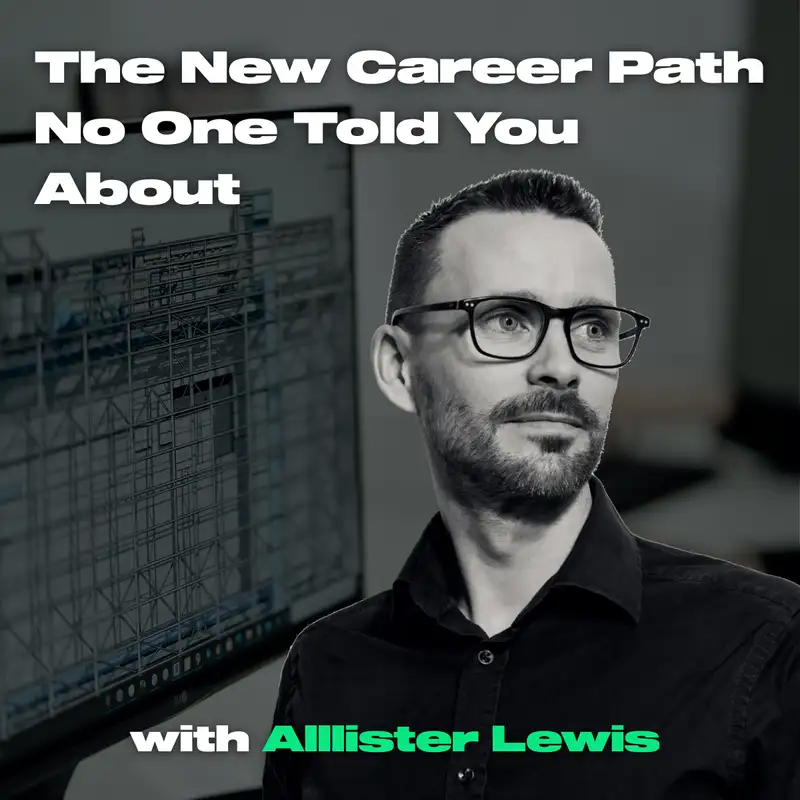
Is This the End of Revit? How Architects Must Adapt (2026)
Untitled - February 5, 2026
00:00:00 Stephen Drew: Hello, everyone. Welcome, all. As long as you're not a cloud bot chatting into the ether and the robots haven't taken over us by the time this goes out, then maybe we're in a bit of luck. It's a very exciting time in architecture. We're all talking about AI. We're all talking about technology. I can feel it in the air, but also we still have to design those buildings. Not everything is AI scripted and all that cool stuff just yet. So I want to talk about the state of the industry today. How is it looking in architecture, and what we needed is a guest that actually does this in their day to day, has done it before, and has done a few other things so that it's not just me going off on a tangent, you know, just mentioning a few of the key things that I watch on my YouTube feed. So on that note, we've got someone that's worked in the industry and done it, the fantastic Alistair Lewis, who has I'm just looking at your LinkedIn here, but you've done these amazing stuff. BIM manager, head of technology and mentor for women in business. But most importantly, you are now the founder and director of your business a d d Alistair, I got through it. I love it a d d d d d admin that's where it's at. Alistair, how are you today? First of all, are you okay?
00:01:36 Allister Lewis: Yeah. Great. Thanks for having me on. Really appreciate it. That's a great introduction. Wow.
00:01:41 Stephen Drew: I've got to get it all in there before the the Terminator robots take over. But, Alistair, I might have butchered that. Getting carried away. Duncan. The power. For those who don't know you, tell me a little bit about yourself. In your own words, your background, your strength in architecture. And then we can fast forward to the present.
00:02:00 Allister Lewis: Okay. Yeah. That's interesting. Strengthen architecture. That's good. I'll come back to that. Maybe. Um, so, uh, I'm an architect by background. I mean, I qualified in two thousand and seven, and I had a number of years being what I call a normal architect. So I worked at, um, private practice. I used to work at Portsmouth City Council and at Hampshire County Council. So multidisciplinary environments in a council, um, really interesting places to be because of the way that you, you know, you got all those different consultants in one place, plus building control planning and all of that. So that was a normal sort of period. And then I transitioned into being more of a BIM manager. We were doing primary schools at the time, and we wanted to test Revit out, and then collaboration with Revit with all the different disciplines, uh, which was really great. And we did a load of schools in that way, and we were able to compare them with traditional delivery as well, like CAD ones. We could see that BIM was performing better, wasn't quite sure exactly why or how, but you know, they're using Revit was essentially more collaborative and better communication happened because of it I think. Um, and then yeah, I moved into a head of technology role, which I think would kind of call a digital design lead now, um, and that would maybe be kind of more how we describe roles. So you're looking at everything from hardware, software, infrastructure, workflows, training, R&D and processes. Uh, so really broad ranging roles. So we came up with the title, which was head of technology at the time for that. But there's plenty of people in this type of role in, you know, large organizations now. Um, I was there for a few years during Covid, obviously, when everyone had to go remote, which is quite fun to try and work out how to get all the systems to work. And then I moved into a consultancy, which was, um, as a BIM manager, but they did a lot of computational design as well and essentially ended up, um, in a role which is kind of like a product manager doing coding, but helping and coordinating teams to do integrations software, um, development and Revit plugins and things like that. And that was, you know, super interesting. And that company actually changed into being one hundred percent a software development company. So they're called cope. AI. So they were Matlab and then they were cope. And it's the one hundred percent doing software for the off site construction industry. Yeah. Um, and I stayed there in an advocacy role, kind of, you know, doing, uh, outreach for them and trying to kind of promote what they're doing. And I left after about six months because I had this idea that there was something emerging, and I had the opportunity to kind of start my own company. And that's what ad is. Um, and it basically focuses on the technology and the industry. I have a database of software which has got seventeen hundred different pieces of software in it now, which are for the AEC industry. And essentially I'm working with architects around that. So kind of workshops. But this kind of technology strategies as well, which cover all of that experience, I've had over twenty five years to kind of say, okay, this is where you are now. This is where you want to be. How do we create a strategic approach to that? And what's been interesting about that is we get to interview the teams. So it's about sort of six to eight week program, and we interview everyone that we can in all the teams. So from, you know, architectural assistants, HR finance directors, associates, project architects. So we get a really good idea of actually what's actually happening in those places.
00:05:33 Stephen Drew: Yeah.
00:05:33 Allister Lewis: And then we go, okay, this is this is the future for you. So yeah, that's kind of twenty five years in a very sort of quick overview.
00:05:41 Stephen Drew: Don't worry. No, it's all good I love it. I mean, I was there when we joked before this that I used to use micro station, which is true, you know, and uh, that was because I was in one of those bigger architecture practices when, uh, Revit was coming along, the idea of Revit training courses were there, and that was one of the big moments. Um, yeah. Like you said in the industry. And you were there, so you witnessed it firsthand. I think anyone that was half decent on Revit that could speak sense was being shipped over, uh, you know, from all around the world. And I jokes aside, I'd meet some architectural equivalents of part one. Part two. So extremely talented. And now they're like leaders in the space and they're not qualified as an architect. And that's okay. They've kind of done all this stuff. So Revit was the kind of the big thing. Yeah. In twenty I want to say in the UK it was like twenty twelve to twenty fourteen was like really getting to grips with it. In twenty sixteen it was becoming more and more in um, now I think that there's another resurgence, isn't there? there. We've all established that bim's not going away in the UK. It's required for projects over a certain amount of size. But we have this now new opportunity that's come in in the last few years. Um, in the pandemic, we all realized we could all work from home. But then after that, a few new things have come out talks about the metaverse, talks about the AI, all this stuff. Alistair, what's your kind of view on that then? And you also said you left your other job because you felt something exciting was coming up and you needed to get on top of it. Do you want to paint the scene of recently then in the tech world of, uh, architecture?
00:07:29 Allister Lewis: Yeah, that's that's interesting. Yeah. So what, uh, is emerging is what we call BIM two point oh. And Martin Day at AC magazine started the term um in an article. I think it was twenty twenty two. He mentioned it. And essentially it's this new software that's coming out which works in a much different way to traditional AEC software. So Revit, Microstation, AutoCAD, ArchiCAD, Vectorworks, they're all, you know, installed on your computer. You know, traditional tools which are file based. And you're kind of they're quite restrictive in the way that they work. And there's these new tools coming out. And one of the key things I've used to help define what that looks like is the future AEC software specification, which was a direct result of the letter to Autodesk in around I think it was twenty twenty two as well, or twenty three maybe where architects in Scandinavia, in the UK and the US said to Autodesk look you're not progressing Revit. It doesn't change. It doesn't meet our needs. You charge us a lot of money. Please, please do something about it. And Autodesk kind of panicked but then nothing really happened from that. So the future AEC software specification was created as a framework for this is what software in the future should look like. And If you look at it, there's ten key points. It covers all the things that you kind of want from software being web based, collaborative, interoperable, uh, uses AI where it needs to has data and privacy built into it, has sustainability built into it. It's a really excellent kind of framework for what these tools should look like. And I've been doing essentially a lot of research and published a whole report on generative design tools last year. But also these early, early stage design tools for feasibility is like alcohol, Snapchat, hyper chronic, um, and, um, they're emerging and they're obviously saying, look, we really want to get a foothold in the industry. Uh, we think there's a gap here that we can take over from Revit because it's not a very good tool for feasibility really can do it, but it's a bit clunky. So these tools are actually a lot more, uh, fluid. And essentially you can collaborate in them much easier. So that's that's kind of where we are at the moment. So in terms of my database, I had, I think forty different generative design and early stage feasibility software. So I wrote a whole report on them and that's on my website as well. So you can you can buy that if you want to. Um, but it basically just gave an overview of all those tools. And I created a, uh, assessment criteria based on the future AEC software specification to say, okay, to test software and score it consistently. You could use this. Okay. It's basically it's basically a spreadsheet. Yeah. If you go here you find it easily.
00:10:21 Stephen Drew: This is the part where I say last by the way because. So for if you're thinking, oh Alistair should know his website, I'm driving. So he's got to witness the horror of the lack of control. But let me bring it up while here. So the website is a d I o. And so we've got the marketplace for the audio listeners contact database. And we've got a job board we'll talk about in a bit. And you mentioned two point oh here. So here's some information that you've done then. Is that right Alistair on yes. And generative design.
00:10:53 Allister Lewis: Yeah that's right. So in there there's links. There's like a test like an introductory document you can buy. It's low cost. And then there's the more in-depth, uh, review of all the software, um, you know, in much more depth scored and compared against each other and things. So, um, yeah, that's that's there. I've just put a link in our chat actually, which is to the, the testing criteria, because that's free. If anyone wants to download and use that to test software, you can just download that. And you know, it's just a simple spreadsheet. Um, but I used it when I tested all this software and it actually worked quite well. Yeah. That's it.
00:11:28 Stephen Drew: That's nice.
00:11:29 Allister Lewis: Um.
00:11:30 Stephen Drew: Up here as well.
00:11:31 Allister Lewis: Because I speak to lots of architects and like, you know, like, well, we started testing these and we did this and we wrote a few notes and then we ran out of time. And the idea behind this is actually, it gives you a structure to work with quite quickly and easily, and you can benchmark them against each other. Nice. So yeah. So that's that's kind of there. And um, quite a few people have downloaded it and used it, so that's that's useful. Um, nice.
00:11:54 Stephen Drew: Yeah. There you go. And that's for free am I right?
00:11:57 Allister Lewis: It is free. Yes.
00:11:59 Stephen Drew: Here we go, here we go. There are no sponsors on the podcast. Just the people I like. And this is for free. But remember, Alistair doesn't work one hundred percent for free because he's got all that value up there. So let's not be shy and spending money if we can save money because, I mean, I gotta be honest, the frame why I like this and the other documents you've got the taste of the full thing. How many hours have you spent researching all this stuff, Alistair? And not everything is what is meant to be made up to be, surely. And not everything is, uh, surely is right for certain purposes. So isn't is half of this knowing what software is needed and what suits the types of projects that your practice makes. Is that a fair assumption?
00:12:45 Allister Lewis: Yeah, absolutely. Yeah. So, um, so in terms of time it took I mean, it took this month's worth of work in there. Basically, you got to find all the software first. That's the first challenge. Uh, and then, yeah, it's obviously just testing them out, watching all the videos, going through all the resource documentation. Um, yeah. So it's I mean, it's great. It's, you know, it's a great place to be to be able to have done that. Um, and then. Yeah. So we've kind of just gone through all that and tested things. Um, yeah. But the, the kind of key thing then is actually. Yeah. What's best for you. So the report goes into, um, this breaks it into four key areas. That one's for urban design, one's for interior kind of, um, layouts, one's for residential. But then it breaks down and says, okay, if you're doing this type of work, this is best for you. So one of them, for example, is like it's a generative design solution for New York. So if you do buildings in New York City, that's the software for you? Yeah, but there's other ones which are.
00:13:43 Stephen Drew: Yeah, I got you. It's not London centric. You're saying, Alastair, is it?
00:13:47 Allister Lewis: Yeah. Not for that particular one. But then there's other ones which are, you know, based in Australia, like Arc Star and Giraffe. Although giraffe is obviously now available over here. Yeah. Snap is US and India based and yeah really doing some quite exciting things. So um, yeah, the idea is to try and democratize access to that, because when I worked at Matlab, we did a consultancy for a client. They got me to review four of the different generative design tools, and it obviously cost x thousand pounds to have done that. So the report I've done is only a few hundred pounds. So if you're an architect and you're like, I need to know this, it's a very quick way to to access that information.
00:14:25 Stephen Drew: Um, there you go.
00:14:26 Allister Lewis: Yeah. I mean, so.
00:14:27 Stephen Drew: Sounds good to me. Uh, what did you learn along that journey of trying all that stuff? Did you find, of course, the report is there, but like, anecdotally, are some of these software products coming out like an idea and they kind of work and they janky or they maybe they made by like internal teams and then are some more robust and then but some have a lot of potential and then you kind of follow them through their journey like some probably don't get supported drop off, some get funding. Is it is it like the exciting wild west of products out there at the moment?
00:15:03 Allister Lewis: Yeah. So we've kind of talked about it in terms of maturity and some of the tools are more mature. They've got more funding. They're further along and they're ready. So giraffe is an incredibly mature piece of software. I think Snapchat is Autodesk former is as well relatively um, and test fit. You know, those sort of companies are like mature in that area. And then you've got other software which are more emerging. Like you say, they're maybe pre-funding or just very early kind of angel investment and things like that. And they've got a lot more on their roadmap they want to achieve and build. Um, but, uh, yeah. So that kind of maturity is you need to look at that, because if you're going to introduce a piece of software into your practice, you need to be confident that it's going to be around in six months time or a year's time. Um, but equally, um, you know, being able to test this software and seeing what it does and the opportunity to offers, being quite flexible is quite useful as well. And the fact that most of them are software as a subscription now is kind of good because you can go, well, we use it for a month, see how it goes. If it doesn't solve our need, we'll just turn it off and we'll try another one. And yeah, that's that flexibility isn't usually there for like Revit. It's like you have to buy Revit after a short trial. It's you know whatever it is five six grand a year.
00:16:24 Stephen Drew: twelve months minimum free users or something like that right I'm guessing I would imagine. Got it. So and that's quite good then because it encourages people to try it out, and if it doesn't work, then they move away. But okay, so there's lots of stuff there. So if we bring it back then. So this is kind of like BIM two point oh is the renaissance of what you're saying is happening. What kind of verticals are there. Because in my head there's computational design and then you've got BIM, and then you've got generative images in that form of AI, and then you've got AI, which is the not so immediate, obvious AI architecture versions of video and images, but might be back of house stuff, which is also important. Um, and then maybe those verticals intersect with each other. I mean, have I missed any out? Are those the main ones or can you think of anything else?
00:17:21 Allister Lewis: No. That's good. So yeah, you've got, uh, yeah. You've got, um, your AI for AI is kind of split it into two. One is for like manual administrative tasks, like you say, one is for like visualization, rendering, with AI, and there's plenty of tools for that. Now with the back of house things, there's like, um, request for proposal AI builders, which will essentially take all your previous ones and start helping you write the next ones. There's software called pogrom which does that. Um, you've got um, what we do like task management and project management as well. There's plenty of software that to to help with that. And what we find with our interviews is that task management is a real problem. So right. One case is how do you manage tasks. Oh we write it down at the beginning of the day, and then we get back together at the end of the day and see if we've done what we needed to do. It's incredibly manual kind of way of doing things. Whereas you could use tools like asana and, um, Monday and stuff like that. Um, yeah, there's sustainability tools. There's a lot of different sustainability tools depending on what you're trying to do, whole life carbon life cycle assessments and things like that. Some use AI, some are just plugins. Um, um, I'm struggling to think here. The other ones.
00:18:33 Stephen Drew: Um, yes, a lot though, isn't it?
00:18:36 Allister Lewis: Yeah.
00:18:36 Stephen Drew: Yeah. And there's. And maybe there's a few that kind of like intersect two worlds. So, like, um, I'm making this up, but AI and visualization, and maybe there's a bit more one that touches the base. So we've got all these tools coming on AI, I don't think is going away at all. Maybe just on that subject of software and then AI, do you think that there's going to be more of this stuff happening in twenty twenty six? Do you think like the space is exciting, or is it a case of you've got a few big dogs and then some emergent fun stuff as well?
00:19:10 Allister Lewis: Yeah. So this is yeah, it's an interesting question actually, where this is going at the moment. So what we're seeing is software, you know, two years ago, let's say software was starting to emerge, particularly generative design tools and early stage design tools where they're like, we're building the next feasibility piece of software. Yeah. Now they're going, how do we augment AI into that? And there's lots of new solutions coming out as well, which are essentially built out of AI, you know, using Vive coding and, um, lovable and pieces of software like that where you can essentially create your own tools and apps yourself, even within. I mean, Claude is meant to be amazing for sort of coding and things as well. So, um, the democratization of creation of these tools becomes far greater. So you can't obviously like Code Revit as a solution, but you can code a small solution, a small plugin or web piece of software which can perform a task for you and that can save you a lot of time. So a lot of the tools that are coming out are augmenting AI into them. The big thing I've seen this year is compliance software, which will take obviously your drawings, compare them against regulations and go, yes, this is complying. There's a lot of interest in that. I see that developing a lot this year, uh, out there. There will be a lot more of these tools, uh, emerging and possibly knowledge management as well, where architects have got all this data, you know, they might have terabytes of data. They don't use any of it. They just it just sits and exists. So AI can. Yeah. Um, you know, review that information. What's there, what can be used. Is it useful? Are there details are there correspondence, learnings from all of this that we can use, you know, within our practice. And they're starting to emerge, uh, a lot more now. And that's yeah, something else I see this year being quite a big thing.
00:21:05 Stephen Drew: Yeah. My gosh, there was like I remember listening to I think Elon Musk did it, whether you like him or not. Whatever. We're not talking about that here. But he did a talk recently where he said that he thinks that people studied medicine and doing it for more social reasons than not, because soon, uh, AI combined with robots will be able to do the large bulk of medicine. I was quite surprised with that A-lister, that concept, because, you know, I was just in the hospital over Christmas and I'm fine. Don't worry, I'm all good. But it's very people orientated and yes, it's data. And even I actually, because I had my appendix, so I had some pains and I put it in AI says you need to go to hospital and then I have appendicitis. So I kind of was on the way to saving me. I kind of felt like I had it, but it nudged me. Yeah. Yeah. You know, so that helped. So that's real. And but I'm quite surprised by that because to me, doctors and medicine is one of the last beacons for now. We're not saying that. And I kind of feel the same way about architects. Right. So do you mention that we're doing compliance and we've got all this stuff. Do you think that means that the it could be in five or ten years that the role of an architect is diminished, or then do you think that it could be a great opportunity where architects then do different aspects of the design and are removed from the treasury of checking these things, such as compliance and everything?
00:22:41 Allister Lewis: Yeah, I think, I think change their changes on the way. Definitely. We're you know, it's changing right now. We know there's been incredible change over the last twenty years in terms of how we work, and that will continue over the next twenty years. Uh, I think from what you're talking about there, you know, the relationship stuff we still need as architects, we have relationships with clients, with consultants, with end users, with stakeholders. And that's still that's going to be the most important bit. How do you communicate a design? How do you connect with people? How does that what does that look like in the future? But there's the way that we work and produce the information should and will change because we're too slow at the moment. We're too manual. Um, we can't keep up with the demand for new houses. New buildings? We're not building fast enough. There's lots of reasons, you know, regulatory planning, all of that as well. But equally, the way we produce buildings needs a fundamental shift. And what I'm seeing is these companies, the software companies are saying, well, we've identified a slowness in the industry that we can solve, whether it's compliance or whether it's, um, looking at, you know, data, information or auto drawings is the other big thing is can the software automatically create detailed design drawings? And, you know, swap is has been talking about this for the last few years. Gray Burt have built a piece of software which can do auto drawings from a model. Yeah. Um, you know, Quantic are going to integrate that. There's other tools out there. So idea is quite a new one, um, which is a Revit plugin at the moment, which will do all your dimensions on in a Revit model. Um, but that's the beginning. They're going to move on to okay. We can do dimensions. We can do grids, we can do tags, we can do we can take a model and automatically create the information we want from that. So suddenly detailed design stage which takes months usually could be compressed down into weeks, you know. And suddenly you're in a position where, how do you, um, how do you price that value? If you can produce your detailed design stage information in thirty percent of the time, do you still charge the same amount, or do you just say, oh, no, we've done it thirty percent quicker, we can just charge a lot less. And that's how sort of that value proposition of an architect. What is it? Um.
00:25:10 Stephen Drew: Yeah, that's a shame though, isn't it? That's a really weird mentality. I think if there's thirty percent faster, it should have no bearings on the price because it's the architect that has to sign it off at the end of the day. Alistair isn't there, but it scares me that I guess what the first reaction is. Oh, we're eroding the architect's role, and therefore now it should cost less when surely the hundreds of thousands of hours should have no bearing. Right? So.
00:25:37 Allister Lewis: Yeah. And that's I mean, Craig and Alexander talks about this a lot better than me about the value proposition of architects. When, you know, when you when you don't especially associate time with cost, if you take that out of it and suddenly you're in a different position. Um, and like you say, the value of all that knowledge that goes into that auto drawings tool, it's not just free, is it didn't just turn up, you know, someone spent a lot of time creating that. So that's, you know, maybe an architect unique, um, selling point that, that that might be part of it. There might be their design IP. I don't know. Uh, we're going to see I don't know what's going to happen, but it's definitely going to change. That's that's the thing I think.
00:26:19 Stephen Drew: Yeah. It's quite exciting. Now there's going to be some people that are further along the journey than and than not. Um, you know, some people I think are going to have maybe a larger practices. I'm making this up, but I've spoken to one or two. Sorry. That comes across pretty badly, isn't it? I'm not making it all up. What I'm trying to say is typically, I think the larger architecture practices are developing some stuff, but also some I know one or two architecture practices, for example, experiment with it a lot. They're about twenty people inside. So it does vary. It does feel like to me a lot of these things are siloed in house. And also I think it depends on the practice. But maybe there's pressure on like getting projects done and maybe the type of projects like depend effects on how much they're using AI. So what I'm trying to say is maybe a, a company that does high end residential stuff and they've been using vectorworks to. They are probably not going to use certain parts of AI yet, but maybe they're using ChatGPT for office admin in the background, whereas some other companies are further along. Have you heard of any examples in Alistair that are more literal than the hypothetical ones? I just made of people already developing software? We don't need to say the name of the companies, but the kind of things that are being worked on and developed at the moment.
00:27:47 Allister Lewis: Yeah. So I think you're finding that for the large practices, you know, um, they have their own computational designers in-house. They have bin managers that, you know, they have maybe even software engineers. Some have got data scientists as well. So they're obviously big enough that they've got that resource and they can build a tool, whatever that might be. Um, and some of them are building tools and then releasing them, um, you know, for the wider industry to use. So like Hawkins Brown created, Bert was a Revit plugin that was available for the wider industry to use for free. Um hmm. I've got one around sustainability that they've released. Mvrdv have done the same. So there are some of them are releasing those tools. Yeah. Fosters is another one. They've got Cyclops, which is a Rhino plugin. So that's great. And I think I wholly support that because I think that holding it all in house is, you know, we're all doing the same jobs to a greater or lesser extent. So if they can share it even for a low price, you know, that's quite useful. But I think when you get down to that next level where you've got, I'm going to say, medium sized practices and small practices, they don't have those resources in-house necessarily. So um, there's there may be there's still experimentation in use of different tools, but it's it's probably more constrained, those type of practices. You usually wear more than one hat, don't you? You're like, I'm an architect and I'm also the IT manager, or I'm an architect and I do the BIM stuff. So, you know, it's there's a lot of constraints on their time. So and that's where context software is coming in, is that they start to say, well, we've we've found a niche. We've built the tool. You can use it now. And the price is low relatively, because it's software as a service rather than you having to develop it yourself. Um.
00:29:31 Stephen Drew: So this is something that you've been making as well. Am I right on that because we've got context database that you've built in software.
00:29:42 Allister Lewis: Um, yeah. That's right. Yeah.
00:29:43 Stephen Drew: So so I've looked at it, you know, we've been around. Don't worry. I've been here done some right, done some wrong, but okay, great. So you've built a directory for all of these stuff as well. Let's put this up here because this is really important because there's something about kind of giving back by sharing the information here, Alastair. In my head because you could again, even keeping where these things are, it's like, oh just keep it to ourselves. But actually I do think you need to share it, and you're more likely if you contribute to. You give one thing, but you get like four or five things back in return from the group, you know?
00:30:22 Allister Lewis: Yeah. So this so so basically my original idea, I had this database and I was like, oh, I'll create a marketplace. And companies could put their software on the marketplace and buy through there. But that's not how the industry buys. I worked out now.
00:30:36 Stephen Drew: So I've learned I've learned that like, you gotta remember, like, this is the loveliest innocent idea. And I've learned that unfortunately people. So what ends up is that you put them all on there. Is that what's happened?
00:30:49 Allister Lewis: Yeah. So I thought, well, I'll create a I've got an Airtable. This is a simple front end. It's soft, is great. It's really good. Um, yeah. Yeah. Allows you to access all of that stuff. There's some featured companies on the front page. Um, and, you know, please have a look and look through them. They're quite varied. And what they do. Um, yeah. And the idea is, if you're looking for software rather than trying to find it online because you if you put in, um, you know architecture software you will get Autodesk Autodesk Autodesk. Trimble. Trimble. Trimble Nemechek. They bought out all of the search terms for this. The software that's in my database, you won't be able to find easily because they're named in very esoteric ways. They do very kind of specific things. So but in the in the database you've got tags categories. And you can search by any of those depending on what you're looking for. So if it is if the search word is in there somewhere like knowledge management or details or compliance, you'll be able to find them in there and search through it. So um, yeah, that's kind of the idea behind this. And yeah, it's there and it's, you know, lots of people are using it on a sort of day to day, week to week basis, which is good. Um, and I'm going to update my website and everything to kind of reflect this a bit more. Um, and yeah.
00:32:07 Stephen Drew: He's, he's very shy guys. And he does more than ninety percent of of people. So now I think just having it there is amazing. Really. Uh, I so I respectfully disagree. I think it looks great also to give you a break because I know how it gets you get sucked in on the website and three hours are gone before you know it.
00:32:27 Allister Lewis: Yeah. It's awful. Yeah. Definitely don't want to design websites. It's not my not my strong point.
00:32:31 Stephen Drew: No. Yeah. Someone came up to me, Alistair, and they went I like the website. Would you do mine? And I went, absolutely not. Because once you've done one for a long period of time, that's enough. You know, it's it's enough. But yeah. So you've got the contact database. Can we I don't know isn't it. I think it's an unfortunate name contact because to me it feels like calling people out and stuff. But it's construction technology construction.
00:32:58 Allister Lewis: Yeah. Yeah. So I mean I've just picked up a term that I've heard around because, yeah, there's prop tech as well, which is more the kind of property assets and things. Right. In theory, if I was to name it, I'd say maybe more of it's like design tech, because that's the sort of the area design con prop, I don't know. But content kind of works. It's construction focused. It's cool.
00:33:22 Stephen Drew: It's yeah, it's more for the listeners benefit. So it's construction technology. Um, should look what architect is where if it's not registered. Alastair. And take it for yourself. There you go.
00:33:32 Allister Lewis: Yeah, yeah.
00:33:33 Stephen Drew: Maybe have a look after this. Yeah, probably. It'll probably be up for like ten thousand pounds and they go. Yeah. Not interested by some random person that registered ten years ago, but, um, no, it looks good. So there was one thing that you mentioned which I thought was not all flashy at the start, but it was really, really important because the we've we can all get the new flavour of the week of AI. And if you're the business owner or the department, think, great, we need to be doing that. However, you mentioned at the start one of the most important things that companies need to do is to get the foundations right, to organize the things. If the systems and procedures are not correct, then you could get garbage in, garbage out, which is an old saying. Or, you know, you go further in the process and suddenly maybe the quality of the procedures in the business are not there, or the information is not there in the models or they're not right, and therefore it slows the process down. So a quick example is years ago, a model I used to work on in uni. It's got a thousand node points. It won't look right, you know, you know like a thousand polygons. Yeah. Um, is that is that what you find a lot of your time doing that now? So when you speak to these companies is going in and really getting the foundations of the metaphorical building correct before you go on this stuff.
00:35:01 Allister Lewis: Yeah. So yeah. Yeah. It's nice and metaphor. Yeah. So the, the technology strategies we've been doing have identified a lot of things like that. So fragmented data is all over the place where they store it, how they access it, how it's backed up, how much they're paying for it. One of the key things we're finding, because if you go to an architect and say, here's a piece of software, I think it's really good, they'll go, yeah, we probably can't afford it, so we're not going to do it. We've been into a number of practices and the amount they're spending on it, IT support hardware and backup is like enormous. And we're like, well, if you reduce if you reduce some of this cost over here because you're overpaying, then you'll be able to invest in some of the new tools that you might want to explore that will help you do your job better. So that's one of the key things we've discovered. And like I say it, support companies, architects have obviously outsourced this. You know, usually you have a small practice. They start growing. There's a guy who like showed some level of interest in it. He's their IT manager. And then it grows into having a proper IT manager and management things, but many practices that small and medium size have outsourced it. And by doing that, they are putting their trust in someone to say this is the best solution. However, we don't know. We're not trained in it. We don't know what's out there. We don't know if. Do you know if you're you know, your system is up to date because we saw an architect, you know, just before Christmas. Their IT infrastructure was ten years old. It was out of date. It was not patched. It wasn't secure. There's you know, there was all these things were like, well, this is really old. How much are they being charged for this? Oh, a lot of money. And it's like, well, this is insane. So, you know, the architects have been using that IT company and relied on them. And that company been like, well, they don't really ask any hard questions. So we'll just keep this just ticking over. And if something breaks, we'll just get them to pay for a new system. I'm being a bit cynical, but you know, that's the key thing. Um, so, uh, for a lot of architects, I'd say definitely they need to look into all of that, because by sinking so much cost into it and infrastructure, they aren't able to use it on the stuff which they really want to do, which is better tools for design, which is what we all want to do. So yeah, that's one thing we've discovered. But yeah, it's just things like backup and data infrastructure. How do you do work from home and keep it secure? Cyber essentials, things like that. Um, and then yeah, we look at workflows and we talk to all the teams and see how that actually working from beginning to end. And, you know, are they using ArchiCAD. Are they using Revit. Are they using both. Are they using Vectorworks. What are the directors use. How do they influence the way things work. How do how do you capture data in terms of surveys and point clouds. And you know, how do you then augment different plug ins into Revit to help you be more effective and more streamlined? So there's there's loads of things to look into And I've got the first report we did for it was like a really long over thorough report. And we've got it down into a nice sort of hundred page sort of this is what you need to do, um, with what your, what your system looks like. And that sounds like quite a lot still. And I'm still trying to get it neater, but.
00:38:22 Stephen Drew: Put it in there and then.
00:38:24 Allister Lewis: Yeah.
00:38:25 Stephen Drew: Then you can do two for one. You go listen, if you, if you can't do the hundred pages which will, you know, do the A to Z of your practice, then you can and you can do your private chatbot Alistair. You know, but I mean there's I, I know you said hundred pages a lot. It is and it is and it depends if you're gonna I think I think if I was a business owner and I'm going to do massive decisions on the practice, I think that's really great. So yeah. But you know, we can do you could do a light version for the skimmers Alistair can't you. You know.
00:38:57 Allister Lewis: Yeah. We do one for directors particularly because they don't have time. They're obviously super busy. So we do like a, you know, well, we did a presentation this week. We had three slides. One was uh, the introduction, one was about us, and the last one was his ten key points that came out of it that you need to look at. Yeah. And that I think kind of works quite well. That is.
00:39:16 Stephen Drew: So good. You mentioned that I am so fed up of death by PowerPoint, right?
00:39:21 Allister Lewis: Yeah. Yeah, yeah I'm good at that as well. So, uh, yeah.
00:39:25 Stephen Drew: You can do both. You can. If you're going to see a bunch of academics, we can get the slides. Then to win, I'm voting, I'm putting off because I've got to do a slide show after this now. And I promised it. So I'm in that naughty camp, you know. Yeah, yeah. It's coming. And I'm like, okay, open up PowerPoint. And I'm going, how does one do it? But you can even do AI on PowerPoints anymore. There's no there's no there's no yeah. It's going to be everywhere. It's going to change everything.
00:39:55 Allister Lewis: Yeah I, I think it will do presentations for you with AI.
00:40:00 Stephen Drew: Oh, I'll be writing it down after this. That's what I'll be doing. I'll be. I'll be checking that out. Oh, definitely check it out. No. So I think it's quite an exciting time. Uh, what's interesting is we often focus on the the bling. Okay. What's going to draft the. Let's get midjourney. Let's do this, let's do that. But I do think that some of the quickest things that in the business can do, um, with AI is stuff like data entry and automation with something like Zapier. Yeah. You can just you could just go to town on stuff. I mean, what I was going to ask, though, if we flip it around. So we've talked more about the companies, more about procedures, talked about maybe if someone's in a team in house, these are the kind of things they can look for. But perhaps we can flip the conversation quickly over to people's roles themselves. So Alistair, you're a great example of you were an architect then you were ahead of, um, Technology and all this cool stuff, and you joke that you kind of made the title up because it didn't exist.
00:41:02 Allister Lewis: Yeah.
00:41:03 Stephen Drew: Um, what's it like in twenty twenty six, in terms of these emergent jobs at the moment? Is there lots of scope for architects who want to become a BIM coordinator or BIM manager to do that? Are there is there enough scope for architects who are passionate about parametric and computational design to have roles now and go into these niches? I'd love your view of the lay of the land of the job sector.
00:41:30 Allister Lewis: Yeah, that is interesting. And so I when I started, uh, it was twenty twelve. So I started using Revit in two thousand and eight and joined Hampshire in twenty twelve. And they said, we want to run, uh, one of our primary schools in using BIM. And that was very early stages of the UK government strategy for BIM twenty sixteen was the the mandate and everything. So we were part of a pathfinder project for that. And at that time, it was like there weren't many BIM experts. Maybe Revit experts. So I did. The Rics had a course on being a certified BIM manager, which I don't think exists anymore, but I did that to start with, and then I, I did a master's in BIM as well at Middlesex University and okay, that was a part time course for two years, but that was twenty fifteen to twenty seventeen. And what has emerged since then is this whole idea about digital design leaders, and that these are individuals that don't just manage BIM and Revit and Dynamo, but they are doing a whole load of things across the practice to do with technology. And we we've got a webinar we're running tomorrow actually with alcohol, which is the future of BIM manager, which is um, basically digital design leaders and what that looks like. And it's an evolution of the role essentially. But I did a whole load of scrolling through LinkedIn yesterday to essentially spam a load of bin managers with this event because I want lots of people to turn up, and it was amazing to see how many bin managers are actually on LinkedIn and that's their full title. Is bin manager across, you know, architects, engineers, consultants. Um, you know, some are working for universities and other kind of large estate teams. So the term bin manager has emerged and there are plenty of roles for that as well as bin coordinators I think I think the digital design lead is the kind of that next step up for those individuals where they take everything that they know from a bin level and start to actually what's the next step up? How do I, you know, do I know about AI? Do I know about infrastructure and backup and hardware and software and also have a, I'm going to say, an aptitude for kind of leadership. And yeah, um, the qualities which are very good at communicating with people, bring them on board, take them on a journey where we're going to transform from here to there and things. So these these are the emerging people out there. I don't know if that's something you're finding in your kind of the work that you're doing. You know, assigning people to the right roles or practices coming to you saying, we need this.
00:44:06 Stephen Drew: Yeah. I find that the computational roles is the one which because it's not an official job title or let me rephrase it now, you just mentioned the interesting thing of there is a title of a BIM manager. There's a title of BIM coordinator, and digital design lead is something that you would get at like um, an hmm, as you mentioned earlier, makes complete sense. Um, but yeah, computational design is the strange one because I think it gets bunched in with design architects. So like a passion for computational design. And then you'll have like a company like Zaha Hadid who might have a computational design team, but they kind of feed into the whole big office. But because it's not an official title, I think it gets a lot of, uh, frustration. And I think that people who are very good at computational design maybe then get frustrated with the salaries involved with that because it's still around, still around the same peg as really an architect. Um, and then there's a frustration in there. And so I think that computational design could be a title in the future. We see more and more, but it would be limited to the type of companies. Whereas I do think every company over a certain size really does need a BIM manager. Yeah. Or if it's a small company, someone gets lumbered with the BIM, don't they, Alastair. Like you said.
00:45:31 Allister Lewis: Oh yeah yeah yeah yeah yeah yeah.
00:45:33 Stephen Drew: Like you you over there. You look very good. And you know the word Revit and you. Yeah. You're going to be our manager and sign off all the drawings. But yeah that's also how people get into it though which is kind of cool sometimes I've gone around but I think like bim's more refined. I think computational is more could be in to do with other people's jobs and therefore people get frustrated. They'll come to me and go like, have you got any computational design roles? I've got to say not really. You kind of got to angle for a company that does it and worm your way in the team. Or we can look, but it takes a bit of time. Also, I haven't seen any like AI consultant role or anything other than sorry, in-house AI role. It would be part of the digital team. And then you might have one or two people passionate about it. But I think that in the future I'll tell you one crazy quick one. I said not to go on a tangent, but I remember spending a week or two sometimes doing a collage from scratch. It would look good at the end when I was a part won as an architectural assistant. That is the kind of job that would be done in like half an hour in Photoshop now with AI.
00:46:44 Allister Lewis: Yeah, absolutely. Yeah. So yeah.
00:46:47 Stephen Drew: Does. I think it will. I think it could remove lower entry jobs. That's the other danger of AI. I think it could be a problem for part ones in the future. Alastair.
00:46:58 Allister Lewis: Yeah, yeah, yeah I agree. Yeah. Because a lot of those jobs that they brought in to do is can you sort out this Photoshop image, can you tidy up this illustrator. Can you just can you do these markups on this drawing for coping, you know, uh, details whatever. So that's the risk isn't it? But equally, yeah, we want those people to come into the industry and form relationships and culturally transfer, you know, change the way we do things. Um, yeah, I can.
00:47:29 Stephen Drew: See the risk there, though. And hey, this is not just an architectural thing. This is everywhere. But also it will become very I think the gap will be huge because on one hand already there's a frustration in architecture of it costs a lot of money to study for the salaries that are already there. And then on the other hand, we're kind of saying, well, maybe we don't even need a part one. The way it's going. So it might be that people just jump on Alistair part two, the way it's going, you know? Crazy.
00:48:01 Allister Lewis: Yeah. I mean, just to go back a little bit on what you just said about computational designers, and we spoke obviously before this. So we, myself and two others, Brian and Stephanie, we set up a website called AC Tech Jobs and the the reason we did this is Brian and I were both sharing roles, um, that we kept seeing on LinkedIn. So companies would say, we need a software engineer, we need a UI, UX designer. We need, um, you know, front end, back end, whatever it was. And we thought, well, let's make a central location for this, and this is what we created, basically. And we have five hundred roles on here at any one time. And it is about for those people who want to move into the software side of the industry. And when you talk about computational designers, I put computational designers on here because it's very much a a jumping off point. So computational designers in architecture very often move to content companies because they got coding skills and because they understand the side of things. Um, and exactly as you say, they want to essentially get paid more. And moving into the software side of it, there are better wages. I'm going to say, I think generally than in architecture firms. So we are. Yeah. So you've got one there. Computational designer. Who's that for. Is it populus.
00:49:24 Stephen Drew: Populus. Yeah.
00:49:24 Allister Lewis: Yeah. So we put these on there because they're quite interesting. And but equally there's you've got research AI research engineer. That's tech time. They're based in Japan. They do a knowledge management piece of software which is really great. Um so.
00:49:40 Stephen Drew: Yeah. Yeah.
00:49:40 Allister Lewis: So yeah.
00:49:41 Stephen Drew: Quite a lot of stuff here isn't it. So it's also. You've got quite a range already. I'm browsing and you've got some, like, tech platforms and then you've got some architecture places. We talked about populous, but then you've got the, um, the rendering engines and stuff, haven't you? Yeah.
00:50:00 Allister Lewis: Yeah yeah yeah. Companies like speckle is interesting on here because they were just bought by Acorn. So Acorn now have their own in-house AI engineering team, which they bought for about three hundred and thirty million dollars.
00:50:13 Stephen Drew: Holy moly. Yeah. That was that was not thought lightly then Alistair, was it. That was a proper takeover. Bring the skills in-house. That's clever. Yeah.
00:50:23 Allister Lewis: And then you've seen recently that, um. Uh, Procore have bought a company called Data Grid, which is an AI based tool they're going to integrate into their software. So lots of these startups are essentially building software because they are looking at for acquisition in the future, because you can make a lot of money if you've got a great tool. Um, so that's partly why a lot of these, this kind of software, um, is developing at such speed. Um, so yeah. So I think, you know, for those maybe watching this who are thinking about what their future career looks like, it can be in architecture. And I love being an architect. I think it's amazing. But it also can be you can move into software. There's a really interesting future there, because these companies need people who know about the AEC industry and how we build and construct, and they want that experience brought into their teams, um, in a variety of roles, whether it's product manager, sales, customer success, marketing, etc..
00:51:18 Stephen Drew: Yeah. Can I touch upon that? Because I want to just last five or ten minutes on this. How does a traditional quote unquote architect who's passionate about computational design, passionate about all this stuff, move over? Alastair, like you did years ago? Uh, because I get asked it over and over and over again.
00:51:38 Allister Lewis: Yeah. So I created a resource. Actually, I think so. One of one of the things is about product management. Um, and that I see is a really good point to move into, into the software side because you need a knowledge of, uh, architecture and the construction industry, but you also need knowledge of how to develop software. And I created a, um, a resource which was how to become a product manager. Uh, I'm just trying to find the link. Hang on. Bear with me. Um, because that was what my kind of thought was, actually, this is how you get into, you know, the industry in a fairly easy way. Um, so there you go. There's a link there for you. Um, so that's one way of doing it, I think if you're interested in this area of product management and understanding how software is put together is really good. So there's plenty of free courses about software using, uh, principles like agile and, um, management processes and things. So looking at that, there's quite a few kind of computational computer science people who have moved into the industry as well. Yeah. So this is it here. So yeah, it's fairly short. There's two case studies in there of people. There's three case studies in there. So people have moved from traditional AEC into software. So someone who worked for uh someone who works for Autodesk Tectum and also for glider, um, they just tell you, tell you how they did that. I mean, one of them. So Evelina, she was in Japan. She just moved there. She was doing Japanese lessons and ended up sitting next to someone who was running tectum. And they gave, you know, she she got a job because of that, which is completely, like, coincidental. Um, but equally, um, tazeen from, uh, glider. She was head hunted. Hunted from university, I think, to move to view city. And then she worked at glider. So, um, there are ways out of architecture. Uh, you know, I think the main thing is to explore the things you find interesting. So if you're interested in computational design, go for it. Join lots of courses. Explore with people you know. Go to the Architect Network, which Olly Thomas runs and do some of their courses on grasshopper and, um, Dynamo and things and, you know, just get get part of a community, get part of a group who are interested in the same thing. And it as always, your contacts, your network is going to help you move to that. The role you might want to move to I think. Um, so yeah, I've leveraged LinkedIn hugely, you know, to reach out and meet an audience of people that are in the same area and, um, like minded. And we're kind of yeah, moving on from there. So I think, yeah, hopefully those are kind of some useful kind of resources.
00:54:24 Stephen Drew: Massive. I think you hit the nail on the head. In the old days in recruitment, I would desperately, um, be aware of the Grasshopper London meetup, for example, if I had a grasshopper assignment, I would desperately be trying to speak to people in that going like, hey, who's really hot and popping? Because I would love to have a conversation with them. But the point is, that's a lot of people passionate about a topic meeting for solutions. And that was ten years ago. And there's I'm sure there's new ones now. So yeah, that's really, really exciting. Um, the I had one final question. You talked about people moving into away from traditional roles into, um, alternative roles, but I was more in general, how do you feel about the state of the industry? I said all this stuff cautiously, but actually I'm quite optimistic. And I think that these technologies will allow hopefully the architect to go back to the core role of design. I use it in my business to free me up from the mundane data admin and I'm hoping it's the same way. How do you feel, Alice, about, in terms of sentimentality, on where the industry is going and everything at the moment?
00:55:43 Allister Lewis: Yeah, I think, uh, I agree with what you're saying. I think I want to see it move us forward. I want us to, I suppose, reassert our value to clients and really think about what that is. I've always been a little annoyed that the Riba have just said it's about design. That's what we're good at. We're just good at design. I think architects are really good at loads of different things. We're really good at project management, we're really good at technical stuff, we're really good at project delivery, we're good at client advisory, we're good at, you know, handover. We're good at, you know, asset management. Architects have massive range of skills. Design is is probably paramount. And that's the fun thing about architecture isn't it. The design part. And but equally plenty of people have loads of really good skills. I think we should really redefine what that architecture role looks like rather than just saying, well, it's about design because very quickly you're like, well, if we don't have project management and if we don't have client advisory and we've got all these tools out there, we're just literally there just designing a facade, maybe because everything else has been done for us. Yeah. Um, and I don't think I don't think we should get stuck there. I think we should really be like, no, we should. We should be the arbiters of this technology. And we will deliver, you know, the amazing stuff our clients want because we're engaged. We are forward thinking. We're looking to what's next, because we've had this conversation about, um, the head of the RBA president resigning from the ARB and people getting all excited that, you know, the ARB is going to be, you know, transformed and, you know, maybe that will happen, but it's going to take years. Maybe, I mean, maybe less, but I don't see it. I don't see it happening. And I don't want us to go backwards. There's no point. We're not going backwards. It's too late. Yeah. Nostalgia is not going to win on this. We're not going to go back to the days where we were the head architect and everyone, you know, we we need to redefine what that future looks like as an architect who is collaborative, innovative, technologically advanced, able to use the tools and deliver for clients and for these wider issues such as sustainability and urban growth. And, um, we can't do that if we go backwards.
00:57:58 Stephen Drew: Yeah. No, I couldn't agree more. Well, I always like to ask the guests at the end if you have any other questions for me. Alastair, you begin to get to know me. You can't wait to leave in a, in a, in a in a ball of flame and fury at the door. Do you have any questions for me at all? Um.
00:58:18 Allister Lewis: I'm just I'm just curious about what you see, I suppose, out there with. Because you're seeing from both sides you have companies saying we need these type of people, and you have students and, uh, Existing professionals saying, I want to move jobs. I want to get a job here. I'm just curious to see what your feeling is around all of this.
00:58:37 Stephen Drew: Yeah, it's I don't think it's going to slow down. I think we're in a strange time coming ahead. My immediate worry is for the part one. Probably why I mentioned it here, because I see that role changing. Um, but, uh, because I have my own business, um, I, I, I am invested a lot in the AI because I know I don't design buildings, but the it's generally the same thing. Like, how can I optimize my business to free up more time on fee earning tasks and remove all the other stuff? And therefore, you mentioned software platforms. I've been doing that myself. I've been doing it all and learning. So there's two things I think. So for it's one, it's a really exciting time for architecture business owners because I think if they get the AI piece down, you can save a lot of time. It can help with marketing, it can help with doing all this stuff. It can remove data entry, but it hallucinates less. But you still need to check everything. That's the important distinction that I've learned with AI. You can't just whack it out the door. You have to think of it as a rebellious part one and you need to double check. But it is the cheapest employee that you will ever get.
00:59:55 Allister Lewis: Yes.
00:59:56 Stephen Drew: Yeah. If you set up the constraints right, you know, jobs, this and that, this and that. Um, you mentioned the other part of the question, what's it like at the moment coming into architecture? I think it's a really exciting time, but in an unconventional way. So if you've got the bug for designing buildings, um, and there is no other job in the world that can do it, yes, it's really hard. Okay. Salaries and other sectors can be higher, but you get to design buildings in the urban fabric, which is not something many people do. You are the architect. If you enjoy that and you enjoy seeing a building come through, I think it's the best job ever. I have another caveat to it though. I think we're very bad in architecture as saying you have to do your part one, you part two and part three, and if you don't or you don't continue doing that, then you are a weirdo and you are someone that's failed and you're not a true architect. And it's I think it's a real misnomer because it's the degree and diploma itself is so hard. You you try so long, you do these crits, you work on these projects, you do all nighters. You. So I think architects are extremely competent. People like insane. And therefore I think if we can get rid of this notion of you have to just do that and do other stuff, I think that would be great. So one thing I admire about you, Alistair, is that you're quite entrepreneurial. You know, you've done mainstream marketing? You've done that. But you're setting up this. You're seeing ideas and you're building things. The job board, the this, the that. The downside is as ideas, people get smacked in the face when the idea you go, oh, okay, this is why this is hard. We learn and that's what we like. But I think that kind of person does really well, um, in business and that comes from architecture. Yet we don't talk about that enough.
01:01:51 Allister Lewis: Yeah I agree. Yeah, that's a really good point.
01:01:53 Stephen Drew: And, you know, I've known people I've gone in to be urban, you know, UX designers, um, ten, fifteen years ago, one guy I knew was really good at coding. Yes, there were better people who could code in the office, but they liked the way he looked at things like a designer that comes from studying architecture. There's loads of stuff, and I think we should champion it more. And I'm okay with people doing going into other things, because that can sometimes add more value to the industry in the wider sense, but we have to get rid of that stigma of if you don't do become an architect, you're, uh, a flop. Does that make sense?
01:02:31 Allister Lewis: No. It does. Totally. Yeah, I totally agree. And it's not. It's not for everyone. And we all have loads of different skills, so you just apply them in the area that that can best, um, benefit from them.
01:02:41 Stephen Drew: Yeah, I'd like it more like now. Okay. You've got a degree or diploma in architecture. Yes, you could do that. And then maybe it would be good for you to try it. But you could work in, uh, main contractor. You could go to, uh, like a project management software app in the construction environment. Or you could work for KSA Chaos Engine doing the next visualization thing. Yeah, I think we should start talking about that more is what I'm trying to say. You know.
01:03:09 Allister Lewis: If you, if you read, uh, AI and Architecture by Neil Leach, I don't know if that's the right title, but he wrote a book on this. He does. He suggests fifty percent of architects should carry on being architects, fifty percent of architects should stop and should start developing software. Really? Yeah. So he's like, you know, in order to. Yeah, that was his I think he's been provocative. But it's an interesting thing is like, we don't have to just keep doing stuff. We can actually build the tools that architects use.
01:03:38 Stephen Drew: Yeah. Well, you mentioned lovable and I played around with ripple, and I do think it helps to know the software a little bit otherwise.
01:03:45 Allister Lewis: Yeah.
01:03:46 Stephen Drew: If you just vibe coding I think it can fall flat in itself. Alistair, you know, if the project scope is too big. But it's so true. And that's the last thing I'll say. There was put it this way. So with my website that I've made, I wanted to make a function. And in the old days I would have paid a WordPress theme or plugin to do it, or try to learn it myself and scream at the wall. If it was very easy, I could manually do a bit of PHP, manually do a bit of CSS. Okay, when it went mental I'd have to get someone on board. Honestly. Alastair I went in ChatGPT the paid version and I yeah, I know you can get all these environments, but I pretty much vibe coded it there because the scope and that's what you said earlier was was less. And then I made the plugin from scratch, which works.
01:04:34 Allister Lewis: Wow. Yeah. That's amazing.
01:04:37 Stephen Drew: You know what I mean? Like and but it was just for one task. The parameters were there. It didn't work. I got a full five times and it did it. And I avoided paying someone to do that. Um, yeah. And I don't mind doing that. But what I mean is, it was amazing that you could just do that yourself. So if you think like that aspect of the project, then surely it puts that's what an architect is, right? We're problem solvers. No.
01:05:01 Allister Lewis: Yes I agree, totally agree. Yeah. And you can apply that knowledge in a lot of different areas.
01:05:07 Stephen Drew: Yeah. There was a quote and I want to hear your opinion on this last, last thing before I let you go back to your other jobs and everything. Right. And all your millions of really good websites because they are amazing. We will recap them. But there was a mag in the magazine I read before, and there was this guy who used to do interactive exhibitions and like, uh, and these cool, like, displays, and he was an architect and all this stuff, and he would basically learn one programming software to get the task done.
01:05:33 Allister Lewis: Yeah.
01:05:33 Stephen Drew: And then he would do something else to get the task done. And someone asked him and said, like, oh, you must be an advanced expert then in all these tools. And he said, not really. I just learn enough as I need to get the outcome. And then I, I don't do it anymore. And I thought that was a really interesting way of looking at it. Like an architect, you know, you learn just as much of, I don't know, C sharp to get the outcome and then you just drop it for a while, you know. Yeah.
01:06:01 Allister Lewis: I mean, and that, that that works for all this new software that's out there. You can just pick it up and go, what's the best tool for this thing? So we want to do flat layouts. We'll use Finch. We use it for a month and it works for this project and we don't need it anymore let's say. And then it might be the next month. We need to do a heritage project where we're going to use something that can take in point clouds. And because every project is different, you don't have the same pipeline typically. So you need to identify the right tool for the job. And yeah, you could learn as much as you need to to perform that exercise and then move on to the next one.
01:06:32 Stephen Drew: And that, I hope, is the role of an architect. But if I'm in the job center, me and you, then we have, isn't it? We'll find out. But for now, we're okay. And I feel more optimistic than, uh, negative. I think you've always got embraced this stuff, but. Yeah. But, Alistair, thank you so much for being on before you leave. Um, I, in case people want to get in contact with you, I know I brought up the links also for all your listeners. I'll say them in the end, but where can people find you? And I'll go through all the emails.
01:07:05 Allister Lewis: Uh, LinkedIn is probably one of the best places, so, um. Yeah, Alistair Lewis is fine on there. Um, but, yeah, the website, you could there's a contact form on there. Um, but yeah, LinkedIn on there a lot. So just connect there and I'll be very happy to help if I can.
01:07:21 Stephen Drew: Fabulous. So the main website to find all the amazing projects that it does is a d d d dot io. I like it, it's a good name in my opinion. And then the other standout, if you're thinking about careers and this stuff to get ideas is a tech jobs.com so great for tech jobs in architecture, but even going on there for five minutes with Alastair, what was interesting is all the other companies I would have never thought of and why would you? But again, we're just going to steal the thousand hours that Alastair have got. But as long as you're browsing around the website and you click and get, I don't know, give him a good feedback then. Yeah, that'll be good enough for now. Yeah.
01:08:09 Allister Lewis: Feedback super welcome. And if there's stuff we can produce or build that's helpful like the product manager resource, we'll, we'll If we can create that. So yeah super happy to to help.
01:08:18 Stephen Drew: But bless you and thank you so much for being here. I really appreciate your time. And on that note, I'm going to end the podcast now. If you liked what you heard, reach out to Alastair. I love it when people pivot between really different creative roles in the industry. And although it doesn't sound creative, getting that foundation of all the digital stuff so that you can do creative stuff, I think is a really, really, really important thing. So check out all of what Alastair's done. All of that interesting software that's coming out, looked at, reviewed, worked out all the case studies that could save you hundreds and thousands of hours. There you go. Thank you so much. I'm going to end the stream here. Take care everyone.
01:09:03 Allister Lewis: Thanks very much.
Creators and Guests