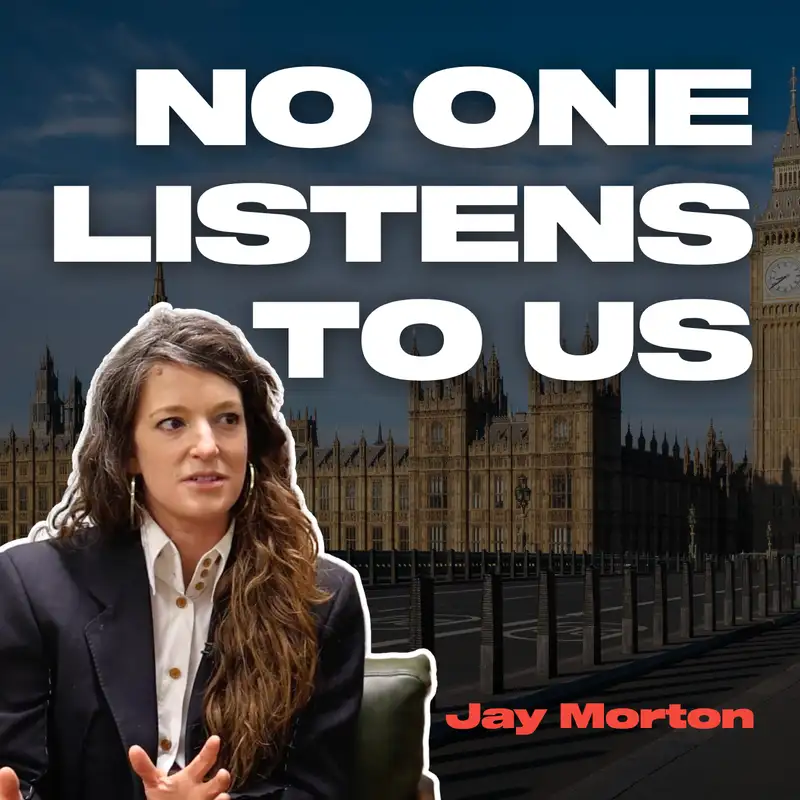
Why Architects Have Zero Power in the UK Right Now
Summary
Stephen Drew speaks with Jay Morton about why architects have so little power in the UK built environment, what RIBA needs to change, and how the profession can build a stronger public and commercial voice.00:00:01:04 - 00:00:31:11
Unknown
It's the 15th AGM. And if you haven't been told by the RBA in your inbox already, it's voting season and you've got to pick who is going to lead as the next RBA president. And I'm really lucky here that I have a friend and a colleague from the industry, which I've known a little bit of for a while, and I've gone to them a little bit more, and I'm excited to say you need to listen to what Jay has to say and think about voting for her as the next RBA president.
00:00:31:14 - 00:00:56:04
Unknown
Jay, welcome to the podcast. Thank you. Well, how how are you doing? I'm yeah, I'm doing great. I'm really excited. It's been a whirlwind and a extremely busy campaign. It's been great to get to know lots of people. And also, the good thing about campaigning is it's that it's a really hone what you think and what you want to do and what kind of president you want to be.
00:00:56:04 - 00:01:15:12
Unknown
So you actually start to shape probably what the next. If I win, what the next few years are going to be, it's fighting. So for anyone that has not met you at all. So you are a director at an architecture practice in central London? Yeah. Give me the full team. Before you decided to run. Yeah. What did architecture life look for?
00:01:15:12 - 00:01:51:21
Unknown
Yeah. So I'm a director of Bell Phillips Architects. I have been there for. Oh, God. Over over 13 years. And it's a practice that specializes in. I mean, we do we do everything, but we mainly do housing and a lot of affordable housing. And basically the way I practice is also it aligns with my own politics and advocacy as well, because I think I'm of the view that good quality housing can solve a lot of problems in society, and it's a real honor to actually be able to be part of that system of creating, you know, really, really good quality homes for the people who need it most.
00:01:51:24 - 00:02:12:10
Unknown
And also our workers. We've got a little bit bigger also master planning as well. So not only are you looking at homes and looking at the red line boundaries, also thinking about how we make places and our towns and cities better, how we might retrofit them, make more, make them more resilient. So all that thinking, it's not just about building things, it's about like benefiting society.
00:02:12:10 - 00:02:34:09
Unknown
And that's what that's how I would always have wanted to practice. And I'm really glad that that's the work that I'm doing. Fair play to. So, on the day to day. So you are involved in all these practices. So you, you're on the ground doing all this, trying to keep that, trying to get the work in, keep the business running, which I know from talking to other architects, from large practices to small practices, practices.
00:02:34:09 - 00:02:53:15
Unknown
The same size is also where about 30 people. The challenge is to actually do good work, but actually keep a business running, particularly in 2026 where it was that stay alive till 2025. Then I think it's just about exists in 2026. So I think, you know, I think it's never been harder and we've got more challenges coming on board as well.
00:02:53:15 - 00:03:12:24
Unknown
With, your economy, there's some not quite moving eyes around the corner. So that's making us question how we practice. And you know, but we do have a government that wants to deliver 1.5 million homes. So that is really, really exciting. But the challenge is how do we make sure that those homes are delivered by architects? That's a really important.
00:03:13:02 - 00:03:32:20
Unknown
Well, I mean, I think it's all amazing architecture as a full time job as it is. Yeah, yeah, yeah. What made you feel like. Right. I have to chuck my name in the ring because you busy enough as it is. Yes, but something's compelled you. And I'm a parent as well. Oh, so you've got the kids. Number one kid, one of number one.
00:03:32:22 - 00:03:50:22
Unknown
And you're married to a number of kids? Happily none. Married for 20. All right. And then. Right. Are you guys the architecture couple, then we are. Yeah. We met. But let's go to architecture in the workshop. Where? Where a lot. Yeah, a lot of people. Me, he was in a band like The Bartlett at the time.
00:03:50:22 - 00:04:12:11
Unknown
They always had. They had a ball that they would open with, raffle tickets and it would open sort of once every couple of months. Some of them put on events to raise money for their studio or whatever. And he was in a band and he was performing day. And that's when, I first met him there, and then he performed at a friend's party who lived above a tube station, a friend who is also supporting me, and he now lives in Scotland.
00:04:12:11 - 00:04:34:09
Unknown
So he's championing for me, up there for me. So architecture is clearly a big part of your life? Yes, yes, yeah. Fair enough. And so your question was, why am I so I question why why would I throw my hat in the ring? Well, if anyone who knows anything about me, I never just do my 9 to 5 day job.
00:04:34:11 - 00:04:55:24
Unknown
I'm the kind of person where if something's kind of getting on my nerves a little bit or, you know, I see a problem, I move all my sleeves up and get stuck in. So, you know, housing crisis solve, you know, get involved in housing campaigns. So I was involved in Generation Rent priced out now proudly on the steering group of the architects action for Affordable Housing campaign.
00:04:56:00 - 00:05:22:04
Unknown
Nice. A lot of that is about championing affordable homes. But also I like championing the reason why architects need to be delivering those homes because, you know, tapping that back into it, it being a public health issue and the value issue as well, like what we can what we can bring to society without sounding to megalomaniac, but also, realizing that as a profession, we actually don't have that much as much influence as we used to.
00:05:22:06 - 00:05:45:10
Unknown
And I agree with that. I remember a quote from Richard Rogers of really, you know, from a really long time ago when he actually did have quite a prominent role in government or advising government, was you would see in in Parliament, you would see lawyers, you'd see doctors, you'd see engineers, you'd see economists, architects never. And that really, really struck with me like, why are we not there?
00:05:45:12 - 00:06:11:10
Unknown
And so I become quite political. Obviously, I understand the role of being the RBA's a nonpolitical role. And I need to keep reiterating that I don't want anyone to worry that I'm going to be Partizan because I won't be. But, you know, I got I got political and, just stood eventually stood for Parliament in 2019. If I hadn't been elected, I would've been the only architect in parliament, which is completely insane.
00:06:11:12 - 00:06:31:23
Unknown
We are lucky now. We do have one architect in Parliament, either from who is a MP for the Liberal Democrats. So there is one, but still only one out of over 600 people. So, you know, I mean, Parliament is not the only place, but it does feel like there is a lack of understanding about what we do as a profession.
00:06:32:00 - 00:06:58:03
Unknown
Grand designs is great, but we don't just do one off homes. It's so many other things that the profession contributes. Like you think about our current RBA president, that their specialism is very much infrastructure. And you know, how important is that to have architects involved in that? We do a lot of housing. That's really important. But you know there's architects that can do that, do all sorts of different parts of our built environment, which basically also all influences society.
00:06:58:05 - 00:07:18:02
Unknown
Yeah. And you can, you know, a practice of ten people, a practice of 30 people can be working on some really big projects and I think that the public and government in particular don't quite understand that yet. So when there are real questions about policy, anything that affects about environment, they don't they don't come to us. Same come true.
00:07:18:06 - 00:07:34:13
Unknown
Yeah. So we need to bridge we need to bridge that gap and we need to be loud with that. Part of the reason why probably not is because we're just too bloody busy, as you said, trying to keep keep practices running or stuck in university for longer than we probably should be. Yeah, there it is. There's so many facets to it.
00:07:34:13 - 00:07:54:10
Unknown
So there's but even when you're talking now, what I love is that you care so much about the community, you care about architecture and the way the face of it, but also as part of the challenge of being the RB president because I was on the council. So I gotta be careful what I can and can't say I like that about now so I can say it all right.
00:07:54:12 - 00:08:18:16
Unknown
But but it's part of it's the outward thing. Yeah. Also it's looking after the profession. Yes. And I think that especially a with all the pressures from outside having all these factors, the costs of things going up, the cost of living, it's become harder and harder, I think, than anyone ever in the profession to keep up that morale.
00:08:18:16 - 00:08:43:10
Unknown
You know, they all have some great conversations with architects where they're really happy with their work, but also as being candid. But sometimes you have that conversation with fellow people from the industry, and there's a lot of pressure, isn't there? Yeah, there's been Frank, it's not the highest paid job in the world and you have to have a passion for em and especially wave after Grenfell, which was a terrible thing.
00:08:43:10 - 00:09:03:02
Unknown
But even like little things such as the cost of insurance for projects going up and liabilities and doing these things and winning projects and the pressure and fees, it's all a bit of an uphill battle. Yeah. I kind of think there's light at the end of the tunnel, but. But are you sure you want to get involved in on.
00:09:03:03 - 00:09:24:16
Unknown
And I think we need as many people as possible to get your head, you know, we we basically have to kind of be a bit turgid, like keep, keep going and keep down. But actually we need some, some of us to stick our heads up and shout a bit louder and try and advocate for the profession, because, you know, I think most people are just too busy to do it.
00:09:24:18 - 00:09:47:23
Unknown
And they, you know, I've tried political route, but I think the RBA we do have I think it's about the number of kind of shifts a bit. I think it's approximately 38,000 members. Yeah. I mean, and I think there's a real opportunity to utilize that collection of people that are international as well. Also, you know, across spread across the UK.
00:09:47:23 - 00:10:11:17
Unknown
And that's really, really important because everyone's experiences will be different whenever they're in London. And in Manchester, whether it leads, whether they're in Scotland or whether they're international. But actually what an amazing network. And I think so for the RBA, I'm the I'm as president who the role is to be more the sort of voice that outward facing advocate for architecture and architects.
00:10:11:17 - 00:10:42:00
Unknown
Yeah I think that's important thing which I think a lot of members is missed is what how do we really invigorate that that that opportunity without sounding too political and union. But, you know, how do we how do we allow collective actions, more collective voice? Yeah. So it could be that I stated that I would have it almost like a monthly surgery where any member could talk to me, tell me their issues, you know, just to have a chat, understand what's going on.
00:10:42:00 - 00:11:05:03
Unknown
And I think that that's really, really important. And and also if, let's say a group of members have a campaign that they want set up, like we did with the Architects Action for Affordable Housing campaign, I think we we need to make it as easy as possible to actually maybe enable that. Yeah, that campaign, maybe the RBA put its name on it, use its comms to, to promote it.
00:11:05:08 - 00:11:24:08
Unknown
So rather than putting barriers in the way it should be, if, if everything in that campaign is completely legitimate, Nonpartizan fits with what the RBA needs to do, which is advocate for architects and architecture. Then the the question, the the sort of answer to that group should be how can we help? Yeah. And that's what I'd like to see a little bit more of that.
00:11:24:08 - 00:11:50:17
Unknown
So I think the president is one person. But we have that wealth of members. And I really want to try and utilize that as much as possible so that together we can really boost that voice, boost the sort of advocacy for our profession, why it's important, why it matters to society that that architects are involved in decision making in the built environment, in designing those 1.5 million homes and master planning those places.
00:11:50:17 - 00:12:09:03
Unknown
Yeah. And also and having a voice to government sort of make it clear why why that matters as well. And and just so everyone understands what we do because they don't understand what we do, then why will they pay for it? Well, and also there's a theme because I think almost to solve some of the problems that we face in architecture.
00:12:09:05 - 00:12:29:00
Unknown
I mean, I think it is important even to talk about revenue and money. For one point because, yeah, we were talking even before this, was talking about how you want to look after people on the teams and how you want people to feel supported and keep up with all the pressures, the cost of living going up. But that also comes from when you got projects.
00:12:29:02 - 00:12:47:22
Unknown
It always starts with somewhere, and that fee at the start dictates a lot of things, and that outward perception of what an architect in the industry will help dictate the fees. I feel like sometimes I've been talking about it for years, but this concept of race to the bottom, you know, undercut in each other, yeah, everyone talks about it.
00:12:47:24 - 00:13:09:15
Unknown
It's there's a part of that. And also if, if the if the larger public doesn't understand the value or the perceived value of an architect, and it's really hard to get there. And if you've got a project with a good fee, then it's great, right? So you can you can give people more time, more flexibility. So you do a little bit of research and development and kind of push that project forward a little bit.
00:13:09:21 - 00:13:32:20
Unknown
Right. As well. You know, you might be able to think think a bit more. I mean, pay the architect more. And I was talking to Steve Webb, the engineer, about this more in thinking time can actually save a client a lot of money. In the end. You know, you can actually come up with other solutions. You can maybe make a, you know, make a structure with your engineer more efficient.
00:13:32:20 - 00:13:57:09
Unknown
You can come up with other ways of doing things. You look at a different material and you notice that you can, rather than just defaulting to what you've done before, which is where I think across the entire construction industry is where why we're not pushing forward or innovating, because the risk level and the margins are so tight. So whether it's from architects or particularly contractors, you almost end up having to default to what you know.
00:13:57:09 - 00:14:25:23
Unknown
You don't have that time and energy to think a little bit harder and think a bit longer. And actually, you might come up with a better solution which will deliver more value to a client. Yeah. It's and I mean, and we need to be like really advocating for that because everyone mentions, fee scales when loads of people within the RBA have looked at this competition law as it stands, I mean, we can keep pushing it to government competition law.
00:14:25:23 - 00:14:44:06
Unknown
As it stands, we cannot introduce fee scales. But I think there is a conversation about the fee floors. Yeah. On the matter of building safety. Yeah. And you know, and that's what that ties in with protection, the function and all of those elements as well that, you know, you should not be as a profession as the professional in the room.
00:14:44:06 - 00:15:03:00
Unknown
You should not be putting a fee in that it actually means you cannot deliver that building in a safe way and not have enough time to actually think about things. Yeah, properly. But because this is the thing, what what's really interesting about architectures, you've got the design, the creativity, but then which is great, the great bit is that is the important.
00:15:03:00 - 00:15:29:00
Unknown
That is just money makes the work around all the commerciality of things has to be viable. But the world is changing. And that's the strange thing is even like I'm sure my age now. So I'm 38, so then I know I look like a spring chicken, but, I'm getting older. And my when I studied architecture the year before me, the yeah, well, now I come on, you look younger I I'm God, it's all it's all going wrong.
00:15:29:00 - 00:15:48:03
Unknown
Right. It was the year before me. It was 1,000 pound. The study. Yeah. In in university. Yeah. And I was on 3,000 pounds and I thought I was on the old. Yeah. You were on the one. I was like I still haven't paid off my student like, oh my, what's going on? This is the insane thing. Like so, so young people today.
00:15:48:03 - 00:16:08:08
Unknown
Yeah, it's I just I cannot comprehend and I think it is it's come this way. It's it's, it's this big problem. Right. Because and this is what's happening in my opinion I would like get your perspective on it is so. So I pay 3,000 pounds. I felt really hard done by you were there going a 1000 now 9000 money in.
00:16:08:08 - 00:16:27:10
Unknown
Yeah. And the length for the course is five years. So I think by the time you graduate you've got this huge student that which is anywhere between 60 to 100,000 pounds if you're a national student, if you're international. Oh my gosh. Yeah. So people are understandably coming from the industry and looking for the best salary they possibly can.
00:16:27:10 - 00:16:48:16
Unknown
And when they flatmates in working in Canary Wharf and starting on 50 K. Yeah, you can understand the frustration. But on the other hand it's just not as a an architecture business owner in the UK, it's very hard to just push things out. Right. But we are in a market. Yeah. So where do you even begin tackling the problem?
00:16:48:16 - 00:17:13:15
Unknown
I mean yeah I mean yeah, yeah. Where do we I mean that's almost chicken and the egg. Well yeah I mean some people say part of the challenge with benchmarking. Yeah. Is and it almost salary benchmarking is us actually creating a fee. So you're paying a fee scale based on resourcing. And then it's like, well the fee is only this amount, so we can only pay this much.
00:17:13:15 - 00:17:39:07
Unknown
And then we benchmark with each other and it's like, well, look, staff, you can't complain about the salary because everyone else is paying the same. But we could argue that none of us are paying enough to the value of what architecture is, because we're not taking in a no fee. So we need it. We need, I think it all just it there's so many layers to it, I think what are we are we just a service provider that does some drawing to make things a little bit prettier?
00:17:39:07 - 00:18:01:01
Unknown
And that's a bit of design. Yeah, I think that's not what we are because we are a profession. And I think this is the fundamental thing that we need to keep going back to even if we're a profession, then we need to own the profession we need to take on. We do need to take on risk. I think the whole Building Safety Act, obviously, like the legislation it was by government as it stands, is really, really clunky.
00:18:01:01 - 00:18:29:10
Unknown
But that aside, the actual legislation to have principal design designer have one person that oversees from beginning, from beginning to end the safety of a building. Who better to take that on than the professional? You know, I think we need to keep looking to other professions where we wouldn't let anyone else do it. Like medicine, I think is a prime example, you know, could we could we consider ourselves as like the doctors of buildings and places because actually it's the same with building regulations.
00:18:29:10 - 00:18:52:10
Unknown
You have your building regulations, the approved documents. You can't always 100% apply them to a scenario because buildings, places, they are all unique in their own way and do a certain degree. And it's up to you as the professional that it that is part of more of a vocation with a creative mind. You know, I'm thinking about joining the dots together to apply all of those things.
00:18:52:12 - 00:19:18:06
Unknown
And that's what I think we need to. And that's where we need to own what we are. I think we we need to we need to own being a profession as a starter. That brings value. But we need to. But we need to like skill up and make sure that people trust us. Because I think that has been partly because because government and the public, and I think even ourselves, don't really have a clear understanding of what we do because there's so much hype, because there's so much.
00:19:18:06 - 00:19:50:22
Unknown
But I think this is where the protection of function, I think does come in. But we we need to skill up. We need to bring trusts and make it clear what we do and what we're responsible for and own it. And then if you have to have an architect and if they trust you. I mean, how many times have people been in a project where by a small or a big project where somebody else in the room or you're builders may said something else, and then it totally undermines what you, as the professional, as the architect, is suggesting for a project, because I think there's not enough trust.
00:19:50:22 - 00:20:09:11
Unknown
And we need to bring we need to own that and we need to bring that. Yeah, I think so. It does take us I think we can't we can't blame everyone. I think we do need to own it and take responsibility. Yeah. This is definitely yeah. This is like factors which have happened. Yeah. But if we can have that attitudes then it's just that, oh well the economy is not great.
00:20:09:11 - 00:20:37:14
Unknown
And it's like well okay. Yeah. But that's all of those things always happen. The economy will go up and down and yes, there will be challenging times, but we do need to build resilience into our profession. Yeah. And I think, you know, there needs to be resilience built into the construction industry as, as a whole as well. So I think there is a lot of collaboration with, other, other industries to sort of make the case for our sector as well as making the case for our profession.
00:20:37:19 - 00:20:59:01
Unknown
I mean, I think the nay one, the environment campaign is a really, really good, campaign, which I think everyone should know. I like the engineering. Yeah, do a lot of good stuff. I mean, we need more, like, more. Again, not just London. We will keep talking about London, but I think as a campaign to say this sector is worth more than the financial services it needs, more of a voice, I think is really, really valuable and really, really important.
00:20:59:01 - 00:21:04:17
Unknown
And architects are a fundamental part of that sector. Yeah, it makes sense
00:21:04:19 - 00:21:14:08
Unknown
because you mentioned the good point there. It's not just about London. And while I love London and I ain't going back to Wales even though I love it there's loads of practices out there.
00:21:14:10 - 00:21:34:16
Unknown
Yeah I'm amazed that most of the businesses in the UK are SMEs. So that's yes, I mean I think it's like under ten people, 20 people know it's something is under 200. Right. Okay. And I think no architecture. That's nice. And I think that's a really, really fundamental point. I think that's what makes us quite unique as a industry.
00:21:34:16 - 00:21:54:13
Unknown
You talk to and, you know, people who work in banking or, you know, a lot of other organizations, they're used to dealing with organizations that are more than 200 people. They and that realization that architecture practices, you're you're pretty huge. If it's 200 people in architecture, but that doesn't relate to the scale of projects that you can be involved in.
00:21:54:17 - 00:22:11:05
Unknown
Right? Connie? I think and again, I think that's where there's a lack of understanding there. And can I ask you about how many people are in the team right now? We are approximately 30. Right. Great. So 30. And we've sort of like hovered around that point for for quite a long time now. Like when did you join Belfast.
00:22:11:06 - 00:22:31:16
Unknown
Just so you see you see a few changes. So when I joined Philips it was in December 2012. Yeah. I'd just I'd been in Sri Lanka, me and my partner, when the great time. Not really, you know. Well we were, trying again but yeah, we were working is trying to build a school for our land. Our London landlord wanted to build a school, and he's like, you two are architects.
00:22:31:16 - 00:22:53:10
Unknown
Come and help me. I'm like, okay. Oh, nice. It's very wild. Anyway, we came back and started working about Philips. That was in 20 2012. That was still at a time when we were still really feeling the effects of the recession. Yeah. And architects on the tail end. Yeah, yeah. So an architecture practice would advertise a job and it would literally be like that back.
00:22:53:11 - 00:23:07:08
Unknown
Why was it. Yeah. Yeah. But it was like there was no jobs. Yeah. It'd be like that scene from Harry Potter where just like envelopes and just like flying through the letter box back when we all said, physically, you have to go in threes, and then you get in there and you're like, oh my God. When we get to do need to with Studio Octopi.
00:23:07:08 - 00:23:25:24
Unknown
And they were like literally because get very real. One of these will be series. And I ended up I'm not getting the role there, but then ended up applying confidence in getting a job there, which was. And then the rest is sort of the rest is history. It's great that you've had a ten year because I think we were eight people then, right?
00:23:25:24 - 00:23:49:07
Unknown
So that's even useful because your careers evolved, but you've also seen eight people grow to 30. And how hard that is on every level. Yeah, but there's so many practices out there smaller get and going. And the architects are social. While it's a recruitment business, I still a business in the industry. And personally I found it really hard getting the support to get going.
00:23:49:07 - 00:24:09:07
Unknown
And you have some amazing people, some founders, which will help out. And there's some great people in the community. Yeah, but it is a hard journey, a lonely journey, and there's a lot of risk for people getting go in. Totally. And when you're, when you're starting out and when you're a smaller practice, there's a lot you're having to do yourself.
00:24:09:07 - 00:24:23:18
Unknown
Yeah. So you're having to do your own H.R. Yeah. And having to do your own payroll and to sort out your own insurer and you all and the Wren and I mean, we used to have to like Austin, we go on holiday and he's just like, you didn't get back to you and you thought you didn't want to go on holiday.
00:24:23:19 - 00:24:47:00
Unknown
Just you didn't have time. You just put it into the logs. Well, yeah. And he's just trying to, you know, get projects in and work on those projects and help design those projects and make sure that all the actual architecture output is working, but also having to keep a business, a business working as well. And I think there is, I think there should be I mean, this is where I think organizations like the London Price Forum is quite good, but, you know, the RBA should be stepping in.
00:24:47:00 - 00:25:05:23
Unknown
There is a bit of there is some of that. And then yeah, I've been critical about how much I just think it's, it's such a leap of faith that you can't like no help is enough. But I think there could be a real opportunity there, because actually I feel like the way it's going, because there is so much risk.
00:25:05:23 - 00:25:23:24
Unknown
And what I worry sure is people I think that's that's a big problem, the level of insurance. And then we've just had the rent has gone under which is affected the market gone under and has gone under. That was like the unsinkable ship. Well, exactly. And my old practice used to chip in to the rent. Yeah, yeah. With the hexagon.
00:25:24:01 - 00:25:42:08
Unknown
Yeah. So, so there's all the old Ratners just gone off to Monaco. Well, because then all those companies that were insured by the ran out obviously seeking deals elsewhere, which then in the market I can't believe effects. Yeah. It's so again this is just showing that. And why did they get it. Just because of the pressures. It's a different world.
00:25:42:09 - 00:26:04:06
Unknown
I think there were I think there was a lot of claims because as we know, you've had the cladding scandal. And so I think there was a lot of claims and then they weren't able to take on that. I don't know the full details. No, no, no. But I know that they which is it's again it's another of the problems and challenges with the constructed construction industry.
00:26:04:06 - 00:26:31:12
Unknown
Yeah. Which we are as architects are feeling the effects from these and. Yeah. So like you say, we actually need to be looking at all these things and saying, is there policy that can change? Is what what's not working for our profession? If you're a practice of 2 to 3 people, of your practice of ten over your practice of 30, or even if you are practices of 200, which is technically so that's a me I see you are having challenges, but what what can keep what is important.
00:26:31:14 - 00:26:59:11
Unknown
You mentioned the companies going, but also go back to small practices when Bell Phillips reference was created because it was a competition from Newham Council and they didn't have a Tim and Harry didn't have a company yet. Yeah, that would not happen now. And that's a shame. What can you imagine? Let's pretend right. It's us. Yeah. And then you go, great, I've won the project and you go to the insurer and they go, you haven't got much of a track record.
00:26:59:12 - 00:27:27:21
Unknown
Yeah. How can you do it? Yeah. And the client's like, well, you don't have a company and you haven't, like. Yeah, yeah, I've used word, but yeah. Yeah. And I haven't done a project that's exactly identical to this project before. Yeah. So you can't know we've had I'm not going to name the London Borough, but we've, I remember saying a saying a tender that I actually we took a stand on, we refused to pay it because it was, it was you had to have not only done a project that was basically identical in brief.
00:27:27:21 - 00:27:50:13
Unknown
Yeah, you had to have done it in the same borough, but not just in the same area, within the same like ward of the borough. And you just think, I'm sorry. And like, if. Well, okay, it wasn't Lewisham or Greenwich, but I'm saying you use those as an example. Are you telling me that the, the difference between the same thing is just as I'm ten minutes away.
00:27:50:13 - 00:28:11:06
Unknown
Yeah. You couldn't you don't understand the culture and community of the area, are you is that what you're saying? Like it? Also, I kind of I have this difficult feeling about competitions because in one point, there's the romantic kind of a dream that you have of are we going to, you know, to this competition, but there's a real chance you won't win it.
00:28:11:06 - 00:28:27:10
Unknown
But also what I speak to is I think it's the word tendering. Right. When you tendering for competitions. Yeah. It's like death by paperwork sometimes. Now it's completely, you know, policy on this. What's your policy on that. So not only what that which again if you're a small practice you don't have. Well how you Joe red team that's got it already.
00:28:27:10 - 00:28:46:24
Unknown
Like now you can do a little bit of I can do a bit of I. But on the I point I've noticed a lot of tenders have definitely been written and I. Yeah you can you can smell it the lazy way. Well we with the dashes dashes but like each question is become like 15 questions in one question and you can't even answer all the 15.
00:28:46:24 - 00:29:08:14
Unknown
But it's like like you in the word count. And they're so and they're very, very generic. Yeah. Just think why, why do you need this information. Is it tick box in. Why do you need why do you need a program. You testing our ability to use Ms. projects. Because the program is basically whatever you need. Yeah. Yeah. If you need us to get spanning in six months, we will put the VM resourcing to get you planning.
00:29:08:14 - 00:29:32:17
Unknown
In six months, you could ask a question that says, is there any any issues or risks that you might see with getting planning six months, but that's the actual program. Why are you getting me to draw up a program and telling you what an architect does at Riba? One suit to stage one, two, three. Yeah, yeah, I remember I think I was speaking to some architects who said, oh, if you think about it and you know, one of the questions is what is your policy on this?
00:29:32:17 - 00:29:54:10
Unknown
And have ten people answer, yeah, they have a policy. And when, when we talking about this on one hand, I think in life you have to take risks. And now Phillips wouldn't be there without winning the competition. So you need to do it. But then my attention is with we already talked in the industry about how, you know, there's a part of it's passion.
00:29:54:10 - 00:30:20:11
Unknown
We know it's not all glamorous money, but you feel a lot. You know, it's one of the best jobs ever. You got to say glamorous. It's always like the hot guy in the movie is always an architect. Yeah, I think everyone's got a big car and he's very wealthy. And I think the public see it as Glam Devil Wears Prada heavy work on his like I was somewhere and then it's the 1%, but it ain't them, yeah, I promise I love your islands.
00:30:20:17 - 00:30:40:10
Unknown
Keep going. But when I go on the point of Thomas Heatherwick, who he's not an architect is not an architect. An architect, you know that. Then he gets slated a lot by our profession. I like, but this is what I'm going to say. Thomas has done a lot to be called Thomas when I slipped in Tom. And I've never met him in my life.
00:30:40:10 - 00:31:00:23
Unknown
I just said that casually, like I know him. Yeah, I mean, Tom go way back. He's done actually a lot for advocating for quality of buildings. I mean, he's he's done two radio four shows which would have been listened to lots of everyday normal people. He, you know, and it goes back to your point of buying, having that presence in the public.
00:31:01:00 - 00:31:18:14
Unknown
So that's good for the industry. And I think and I find the stock Thomas Heatherwick T-shirts, I find that actually quite I think it's quite I think it's quite insulting, actually. But my aim in life is that I want people to be walking around with stock j more and t shirts than I've made. Yeah, this is my plan.
00:31:18:15 - 00:31:36:01
Unknown
Yes. The moment you have enough people that printing out, you've kind of you're kind of doing something right. But but there's a point there on that because we choke when we when we met in person the first time we met in person today, because I'm a part Teo and I kind of go like, I'm a part two forever, and and that's it.
00:31:36:01 - 00:32:11:15
Unknown
And I'm never saying. And the architects and but they're they can be a it's a collaborative profession. Right. Yeah. You don't need to. The role of an architect in protecting the function is really important. Yeah. Yeah. But there are loads of peripheral things which can affect architecture, which is great for the good Ryan times. The and I think I would say if you study architecture over do you part one or part one and part two, I think there's a hell of the training that it gives you that some of it's the best four, five, six, seven dimensional thinking ways of bringing things together.
00:32:11:15 - 00:32:40:03
Unknown
I think is is really valuable in multiple, professions and walks of walks of life and more people who've got architectural training out there taking on the linear thinkers and British cinema, in my view. And but what I do think about architecture education is that it actually infantilized it is our young people. Yeah. Because you're stuck in university for way too, too long, like talking about politics and the people that I've interacted with.
00:32:40:03 - 00:33:08:05
Unknown
Yeah. Is this like those, you know, people who are like, younger than 20s standing in a general election and, and the, the, the contact, the contacts, the confidence, the knowledge. And, you know, just getting out there in the real world that I've seen from people who are, you know, 22, 23, 24, it's like, well, why do we not we don't allow our young people in architecture to do that because we keep them at university.
00:33:08:05 - 00:33:26:10
Unknown
We keep them sort of in a silo in a way. And I think it is our being in a bit of a silo that is also not good for the profession. Yeah. And I mean, when I didn't want to get my become qualified, it was almost like if someone looked at you like you'd fall on the floor and somebody never going to get a pay rise ever again.
00:33:26:11 - 00:33:54:01
Unknown
Why say you don't want you? Part three? What's wrong with you? But, I kind of feel like that's more of a modern approach. I was really excited by the architectural Apprentice scheme. Yes. Yeah. To me, that was really, really important. And I feel like it was such a shame when the powers that be in the government, I feel like it was quite a naive to think that employers will pay for the 7,000 pounds that this the government was reimbursing.
00:33:54:05 - 00:34:18:00
Unknown
And just my independent view. I thought that was a real shame. I know that this things before and I grew up, you know, I grew up in, you know, basically social housing in Wales. Ryan. So labor House. Yeah. And I thought it was a massive shame. I'm really worried that because no employers I speak to apart from 1 or 2, are really passionate about the cause.
00:34:18:02 - 00:34:44:20
Unknown
And now we're going to back the architecture apprenticeship scheme. Yeah. And I worry we're going to go backwards. Yeah. I mean, how do you feel about it. Yeah. No, I totally agree. And I think this is a prime example of how because our profession works slightly differently to everything else that we sit for in the net. And so part of the reason why they got rid of the funding for the level seven apprenticeship was because a lot of big organizations were just taking apprentices in.
00:34:44:20 - 00:35:04:23
Unknown
Well, what they were doing is they were using that money to train people they already had. Oh, okay. As far as I see it, this was from, talking to my reader, I got you. So the ruler came across and went, no, that's not anything. Yeah. So because the age is 25 and, I think that's because lots of big organizations, not architecture, I'd say.
00:35:05:00 - 00:35:25:24
Unknown
Yeah, yeah, but lots of big organizations were abusing the level seven apparently. Scheme. So the government stopped funding it above the age of 25. Problem is an architecture that's a long way. After all of you, you are going to hit being 25. This is as far as I see from what I've heard. And again, it's that example of oh, you don't you haven't thought about our profession and you don't understand it.
00:35:26:03 - 00:35:51:20
Unknown
And it is naive to think that practices can fund fund that because they, they really you know, where we're on the no ads really. It's just one step too far. Like I would struggle now. Yeah. If it was the best person. Yeah. That came in and went can you do the apprenticeship? I mean there's I would lose out on having that person in my business, which could help grow my business, bring more wealth into the, apprentices that we have had.
00:35:51:22 - 00:36:16:01
Unknown
It's been absolutely brilliant. That level of they're still doing the creativity and, you know, that bit at university. Yeah. But in terms of their ability and skill, again, confidence, the way that you see that person in the way that they are, they understand working with the client, working in practice, their confidence level is way higher when they're at the same age as someone else who's maybe just come straight out of pot two.
00:36:16:03 - 00:36:41:08
Unknown
So obviously not the same for everybody, but I think it gets you in the workplace of being that professional much quicker. So I'm a massive advocate for it and I think we should. It's a shame and we should definitely try and bring it back and work with government to bring it back. Maybe just for architecture, why not? But I also find the, the apprenticeship from the age of 18 quite interesting and exciting.
00:36:41:08 - 00:37:01:05
Unknown
And I think Open City are doing accelerator program because I've been just learning about this, because I really want to try and get apprenticeships in apprentices into our practices from the age of 18. Yeah, but it was to us, it was quite daunting, like, okay, so how does this where is the support do they need? It's death by paperwork on my paperwork.
00:37:01:06 - 00:37:22:18
Unknown
And it's you need to be matched. How do we find that person and how did they find us? So it's yeah, there are some organizations like Open City that are doing that. But again, I think this is a really valid role that the RBA could be taking on. I mean, to sort of match practices with, with young people, you know, and making sure these young people really want to do it as well.
00:37:22:18 - 00:37:41:15
Unknown
So like get the right young people in. Yeah. And what a brilliant way to, to get people from multiple backgrounds. I mean there was absolutely, you know, talking about you about there's no way 18 year olds would take on 140 grand of them. I mean, that would be like, no, it was high. It was how does it was they become an electrician.
00:37:41:15 - 00:37:56:10
Unknown
That's what I mean. Well, what happens then is it's just this insurmountable debt that you just carry on your life, that you just never pay off. Yeah. And, you know, like, I'm still paying of my. Yeah, yeah, yeah, yeah. You right. You got it easy. I know you just got it's like, well, you got a family doing this.
00:37:56:10 - 00:38:14:03
Unknown
It's not that simple, is it? It's actually quite a big chunk. It gets taken out and you're like an I'm on the teeny fees. Ben. Ben here. I'm seeing them now. Which flip the camera. I'm going to get a camera on use on those. But you've not gone to uni. And you, sometimes you. Oh, because sometimes when we've got uni and I had a great time.
00:38:14:03 - 00:38:38:03
Unknown
Yeah, but in the modern world, if you're not, you know, you can qualify. I think there are different ways to learn. And I think it's really interesting. And back to the point about, part ones and the way that if that first thing, if I what if I can earn the same working and a management role in retail, why would I study UX exit?
00:38:38:08 - 00:38:53:24
Unknown
Well, and this is the kind of thing where we were talking earlier about LinkedIn and a few other things. I actually had a little break and it was quite nice. But yeah, one of the things I mean, Ben, talk about, because we always like to shine a light on all the quality work and the qualities of being in architecture.
00:38:54:01 - 00:39:17:08
Unknown
And it was posted really well, but the, the post that popped the biggest with me this year was I made a post saying about the salary of a graduate in architecture. Yeah, first, graduate level management. And so this and it's kind of true, but it's also interesting the how that feeds this. And, and I don't think it's really conducive to, to the kind of the problem.
00:39:17:10 - 00:39:40:02
Unknown
Yeah. Yeah. So I feel bad after because I'm like I'm, I just perpetuate and yeah hate like the sun. But then equally it would be nice if we looked at that and gone, how can we add value? How can we be more commercial, how can we raise. And maybe if you do, yeah, okay. If you do start on the same salary as someone who works in retail and I'm not putting down either.
00:39:40:04 - 00:39:55:00
Unknown
I mean, one of my face working at House of the. Yeah, yeah, people. And I was a John Lewis waiter I love doing. Exactly. Yeah. I think, you know, I've had some really thought I'm, you know, I'm pretty clear about it, but it's like, okay, well how do you, how do we get to the point that you can accelerate that quicker?
00:39:55:00 - 00:40:14:18
Unknown
Yeah. I mean, but I think also I mean, it's not what the president could do, but I think also as a profession, do we need to look at different models of actually how practices are set up. Because also you have the other issue that can only have so many directors, right? In a practice, if you were a small practice, there's only so many people can be top management.
00:40:14:20 - 00:40:37:21
Unknown
Well then where's the kind of career where therefore it hits the ceiling? So where's the career progression for those people then? Do they go and set up a set up another practice? And then we know you've got more practices than the market can sustain. So are there other are there other models. Do we look to what law does I, I think it's all things that I'm really interested in looking at and understanding.
00:40:37:21 - 00:41:03:18
Unknown
And just as thinking about I don't I don't have the answers now. No. And, you know, I might say something that people go, that's a really stupid idea, but you want to do you have more collaborative like practices where they collaborate together? I have yeah. There are some organizations that do that where you have a small practice and they're in that they've got an umbrella company, but and they all work together and they share resource and knowledge, but they still have their own practice with their own identity.
00:41:03:20 - 00:41:22:24
Unknown
I think there's just lots of things that we can think about, of how we can work together to boost our ability to take on those projects, but we also need the market to work as well. And I think that's where it goes back to anyone who's working in this sector. We need to keep banging on the drum to government because at the moment they want to build these high.
00:41:22:24 - 00:41:40:16
Unknown
I keep using highs because obviously housing is my specialty. You're in the forefront of that. But we're in the forefront of it. And you know, obviously I know that architecture is way more than just housing. But using housing as an example, we have a government that has that vision and drive and that target of wanting to build the homes.
00:41:40:16 - 00:41:56:13
Unknown
We have a housing crisis. They want to solve it. Yeah. Well, then it's like and then they've basically just gone. They go private developers, you need a why are you doing it. Why are you not building these high. Yeah. And I think it's up to all of us to as a sector to just keep banging the drum as to why.
00:41:56:14 - 00:42:21:14
Unknown
What are the barriers in the way. Why are things not happening? Viability is a challenge. Cost of materials which affects viability. You've got labor. You have risk. You have planning. You have Building Safety Act up investment coming from, you know, investment, lack of investment coming into the country. All of these things affect why those buildings are not being built.
00:42:21:16 - 00:42:27:22
Unknown
And that's why, again, I keep talking about collaboration or we need to be doing that. Yeah. Or up to standards because I mean,
00:42:28:03 - 00:42:40:07
Unknown
I'm just wondering I mean, you talked about, you know, when we were graduate and looking for you jobs, you came back from Sri Lanka. Everything. Let's pretend that you were you were looking for a job in 2026.
00:42:40:09 - 00:43:04:24
Unknown
What advice you have for a part one at the moment? In their first job? In their first job? Oh just kidding. And you're applying for the job. You just graduate and it's like, okay, well then go I was actually I, I there's some advice, but I've been to a few of the architecture shows and when I'm a couple of students talking about their project, I think actually it's almost like you need to you are your campaign in a way.
00:43:05:01 - 00:43:21:00
Unknown
And I think I would first say to them, to them have ways of talking about your project in life one sentence, longer version, longer version, because obviously they've been embedded in it for so long that they think everyone wants to hear the full one hour presentation of about one project, and then they haven't gone to the other bit.
00:43:21:00 - 00:43:48:16
Unknown
So I would find really concise ways to talk about your project and weave in why the practice? It would probably you might find that interesting. Yeah. And and with that I think that is developing human skills. We've got AI coming around the corner. I think I want to see people that can get out there, talk to communities, talk to clients, talk to contractors, and really have those human skills, which is essential to being an architect.
00:43:48:16 - 00:43:55:15
Unknown
And I think demonstrating those you will be cut above, I think. And that's what you want. You want to see.
00:43:55:17 - 00:44:14:14
Unknown
we've touched then on the subject of artificial intelligence, I am a big advocate of using it. Yeah, all the time. I think it is the greatest to an SMB can have. Yeah. Is with artificial intelligence understandably with the upside is the view.
00:44:14:16 - 00:44:43:07
Unknown
Yeah. Oh, my job's going to go and ask you all the time. And I can understand that. How do you feel do you feel positive about early on, guys. Because I think there's big opportunities. I think there's opportunities to bring more services back in-house, to have more ownership over projects. So, you know, like elements of project management and you're a lot there's a lot of stuff that we can bring back in utilizing AI, utilizing technology.
00:44:43:07 - 00:45:00:17
Unknown
Yeah. What I don't want to see is again, present similar age that we're kind of like playing and getting quite excited about it, that we then go, oh okay, well then well we can do all the imagery and I can do this, I can do that. I don't need the part one or the part two. Anyway, that is my what's going to happen in 20 years time.
00:45:00:17 - 00:45:40:17
Unknown
We're going to go, oh, I want to like I think go and do something else. And who, who the young generation because yeah, actually what is the AI actually doing. It might be that there's only so much information you as one human being can analyze. So let's say AI is creating plans for you. You still need to understand that you and I think it's a mixture between slow thinking, which is design time and you know, which maybe can be sketching and drawing and then getting like, why do after than sit and click on Micro Station or Revit and tell it to yeah, I could just just know what I want and just do that straight
00:45:40:17 - 00:45:59:06
Unknown
away. So I think there's a there's a mixture of both. But I think then we need, we need to be making sure that we are arming younger people with the skills to know how to analyze and know what's right and know what they're looking for, whilst using those tools. So I think we it should not be getting rid of all younger people.
00:45:59:06 - 00:46:18:14
Unknown
It just might be that the way we shape the profession changes. And this is what I think I'm really, really feel strongly that the RBA needs to be leading on that. We have the plan of work. We are talking about protection of function and this is where we need to say, okay, a human being needs to be making these decisions and making these calls.
00:46:18:14 - 00:46:37:11
Unknown
What does an AI overlay look like in in in our practice, what do we let it do? What do we still make sure? I think you you should have a human reviewing and and accepting a, you know, a plan and looking at everything and thinking about it. Your design is not efficient. And there's lots of things we do in life that aren't efficient.
00:46:37:13 - 00:46:52:15
Unknown
Cooking is not efficient. I mean, it's much better to like, go and buy a ready meal and just stick it in the oven and, you know, whatever. But it's disgusting and it's really, really bad for you. And it's the type of like, I don't want like fast food style buildings. I want things that people have actually thought about as a human being.
00:46:52:20 - 00:47:20:09
Unknown
So we can utilize the tools. But I think we need to still retain the human skills and understand how to. And that's what we do. We translate conversations for communities, conversations with clients, conversations with politicians, councilors and ourselves into into a project. And the AI is just part of the team. But we need to be making sure that we are training up our young people to be able to do the things that we do.
00:47:20:12 - 00:47:37:10
Unknown
Yeah, I think the tools I think, I think so, I mean, it did a drawing issue sheet for me and I was like brilliant, like some of the very painful tasks like get rid of all the time, okay. Or, and, and I think all the data been like, yeah. And I was able to put together a drawing, a sheet with the scope from the client.
00:47:37:12 - 00:47:55:17
Unknown
The draw. Yeah. And got it to check across them all. Great. I did, of course. Look at everything, but it meant I didn't have to sit there in Excel. Like putting letters. It. I know, I agree that kind of task. Thank God that can go just get rid of it and then it gives me more time to maybe get my pen out and draw something.
00:47:55:17 - 00:47:57:18
Unknown
I mean brilliant. Yeah, I agree
00:47:57:24 - 00:48:01:15
Unknown
You are busy. You're a busy person. Yeah. You're direct.
00:48:01:15 - 00:48:23:01
Unknown
So your mum. Yeah. You know, you've got your relationship. I'm in one. It's a bit of work. We love it. You pay, it's fo. And you've done stuff for the local government and now you're going to run for the Arab president. Why do you do it? Why do I do it? Yeah, because I because like, I want to just I really, really care about his profession.
00:48:23:03 - 00:48:46:00
Unknown
Yeah. And I want to bring my level of energy, political astuteness, campaigning attitudes with a small c because the RBA politically neutral. Remember of course I want to sort of bring all of that energy to our profession and sort of try and help lead it towards the future to ensure that we remain relevant, that we are heard and listened to.
00:48:46:00 - 00:49:05:04
Unknown
But also I want to invigorate all of our members to be part of that as well. So I always said at the end of my speech, it's about getting our head up, looking up, speaking up, but most important, being heard. And I want people to look and go, yeah, it's snippets of my campaign and go, she gets it.
00:49:05:06 - 00:49:25:07
Unknown
She's got the energy. I think she can get some stuff done. And I think that's there. And, you know, as you say, my plate is full and I do still manage to get things done. So they know I love it so and I'm very forgetful. So, you know, I'm allowed to vote. And because I am a member of the RBA and I'm a part two, so I get to vote and J.
00:49:25:11 - 00:49:46:03
Unknown
I will be voting for you. Excellent. I really hope you're the next RBA president. Whoever wants to go check out all the candidates. But also, if you did want to vote for any of the candidates, the most important thing is you do vote. Yeah, the amount of people that don't vote because they have this same yeah. Or the busy forget is people that oh just think, oh nothing's going to change.
00:49:46:06 - 00:50:15:15
Unknown
We really approve when my work is around that you can change. And I think it's more important than ever. You pick the candidate you want to vote for. However, for the benefit of everyone. What are the dates that people need to vote? 15th of June, which should be today? We're going to do if Ben, you know, if I'm nice to Ben and he gets it done, we'll be going out on the 15th of June 1st, opens 15th of June, which is today, which is today will close on the 26th.
00:50:15:15 - 00:50:32:17
Unknown
But I would say just get on your email and do it now. Yeah. Doing. Why not you know, on the thing is. Right. And I'm just going to say one thing that's really true for I have voted in the past, but it has been 1 or 2 years where I just thought, I can't be assed. Right. And that's another life, you know?
00:50:32:17 - 00:50:55:23
Unknown
And and now I'm getting older. I realize that actually it is more important than ever. Like, we all work too hard, everyone studies too hard, everyone cares too much. And I think it's just a missed opportunity. If you are an honorable member and you don't vote, so hopefully you do. Yeah, and hopefully this has been useful. And Jay, if someone's watching this.
00:50:55:23 - 00:51:13:14
Unknown
Yeah. And they want to ask a little bit more unlearn or you know if they were like I might vote. I'm going to press on this point. How do they get in contact with you? I would say, link find me on LinkedIn. I, I am being really responsive with people that DMing me on LinkedIn at me, DM me.
00:51:13:15 - 00:51:29:05
Unknown
Yeah, comment on any of my posts of any of my posts. Trigger something that you don't like or you do like. And you can also find my website which is WW, dot, JM or turncoat or UK. Fabulous. Thanks, Jay. I really appreciate you being. Yeah. Thank you.
Creators and Guests